
Friday, July 20, 2012
New Routing
The thing about being a multi-sport athlete is that you can't get fixated on one thing. The Tour, and the challenge, are still going. My first big race is just a week away and cycling has been taking up all of my free time lately. Yet fall is just around the corner. Climbing challenges await and it’s time to start training with those goals in mind as well. And with that, the Friday Psyche presents a vid about new routing in the Canyonlands.
My fall challenge (perhaps this year’s birthday challenge) is going to feature some new routes. I’ve scoped it out but before it gets announced I need to gain a lot more fitness to know that it’s at least feasible. So with Butte training nearly in the barn it’s time to taper, which is a good time to begin some foundation work for my upper body. This morning I’m heading out with Ben to jump on a couple of our fall climbing objectives to assess their feasibility and re-in vigor our psyche. Then we can tailor our training to what we know for certain we’re lacking.
This vid reminds me of my old climbing days when I had ample free time to roam around and look for cool new stuff. I especially like the part when he talks about finding things not only to do now, but for the future—-perhaps even future generations. Quite a few of my old endeavors had this in mind and, in fact, many of my old projects still have not been finished. Doing first ascents is a bit more like an art project than just a personal challenge. You’re looking for the latter, of course, but also always keeping in mind the canvas that is the history of the sport and your place in adding to something that is mainly for others. To me, that was the main driving force about the years I spent exploring for new routes.


Wednesday, July 18, 2012
Panache Spelled Tommy

If anyone needs a power meter, heart rate monitor, watch or any other measuring device to calculating your riding mine are all for sale. I’m going Tommy Voeckler. Who decided we needed all the crap anyway? Just ride your bike and let everything else take care of itself.
On Eurosport today someone wrote in, “If it wasn’t for Voeckler this would be the Tour de Snore”. And while I don’t agree, necessarily, it sure would be a lot less fun. Everyone loves an attacking rider. Especially one who starts grimacing in agony with 60k and three climbs still to ride. Throw in lack of most techo gadgets thought to be indispensible for even recreational riders and you’ve got the definition of panache.
There was a moment today that made me so nostalgic I wanted to cry. Our hero, attacking on the day’s final climb, asking a fan how big a gap he had. No radio. No team DS. Just a guy on the side of the road. Probably took a swig of wine from him too. Maybe even a drag off his cigarette.
For a moment it was 1986 all over again. A lone rider attacks an entire peloton, against the sage advice of anyone who would listen, with no calculation whatsoever about whether or not he might make it or completely blow up. All he knows is that he’s going to put his head down and mash on the peddles until either his soigneur or God himself pulls him off his bike. Win or lose, that is how cool people race their bike. You just know The Badger is smiling.
Tuesday, July 17, 2012
Do You Need Milk? How About The USDA?

A pretty good article on milk came from the NY Times last week, that probably ended up hurting the credibility of the USDA as much as it did milk’s. Our government’s food police, as I’ve pointed out before, are the veritable Keystone Cops when it comes to overseeing the nation’s health. But you probably knew that, so let’s get into the scam over milk’s place in your diet.
Mark Bittman’s blog post titled Got Milk? You Don’t Need It, begins by informing us,
“Americans were encouraged not only by the lobbying group called the American Dairy Association but by parents, doctors and teachers to drink four 8-ounce glasses of milk, ‘nature’s perfect food,’ every day. That’s two pounds! We don’t consume two pounds a day of anything else; even our per capita soda consumption is 'only' a pound a day."
He then proceeds down the sordid history of milk recommendations while citing some interesting nutritional facts such as “Sugar — in the form of lactose — contributes about 55 percent of skim milk’s calories, giving it ounce for ounce the same calorie load as soda.”
The post then moves into storytelling, with his own history of growing up with an upset stomach that never really went away until he gave up milk. This anecdote is common. I’ve long ago given up keeping track of those I’ve worked with who’ve seen their health improve sans milk.
Then he comes back to our government, quoting the book Milk that explains how difficult it’s become to make money selling it, “The exceptions are the very largest dairy farms, factory operations with anything from 10,000 to 30,000 cows, which can exploit the system, and the few small farmers who can opt out of it and sell directly to an assured market, and who can afford the luxury of treating the animals decently.”
In fact, if you follow health news you’ve heard that it’s even worse, the FDA has actually targeted small dairy farms and collectives very aggressively over the last few years, spending millions of dollars trying to shut down the dairy farms that actually care about your health.
He closes, most appropriately, with the lobbying scam about milk, schools and osteoporosis, adding, “In fact, the rate of fractures is highest in milk-drinking countries, and it turns out that the keys to bone strength are lifelong exercise and vitamin D, which you can get from sunshine...”
“...The federal government not only supports the milk industry by spending more money on dairy than any other item in the school lunch program, but by contributing free propaganda as well as subsidies amounting to well over $4 billion in the last 10 years.”
It’s all pretty thorough and damning to an industry that’s continues to take well-deserved hits lately. He doesn’t get into the nefarious world of pasteurization, which has both ruined the would-be nutritional value of milk (it’s not really nature’s food anymore, much less “perfect”) as well as making it easy for Big Dairy to dominate the industry by using abhorrent animal raising and health practices, but it makes sense to keep the story targeted and there’s plenty of ammo.
As for the USDA, well, before you put any stock in any of their guidelines consider this line.
“To its credit, it now counts soy milk as ‘dairy.’”

Which, to me, confirms the USDA has no credit. How does soy count as dairy? The only similarity they share is a strong lobby. A soy bean is a legume. A cow is, well, a cow. Lumping the two together makes about as much sense as calling a French fry a vegetable. And who in their right mind would ever do that? Oh, wait...
Batter-coated french fries now a fresh vegetable on USDA list
I’ll shut up now.
Friday, July 13, 2012
Tour Challenges For Everyone

Oddly enough I’m not the only person in the world who’s thought of doing challenges that mimic grand tour bike races. For your Friday Psyche I present a couple of other versions, one for motivation/cool-ness and another for practicality.
Starting with the latter I present the Velo News Tour training program. This is a great opportunity to, not only mimic what’s going on in the Tour (in very little time each day), but to get a solid cycling training program for free. I can’t believe it took me so long to hear about it but I’m sorry to say that VN has been one of my old daily indulgences my busier schedule has caused me to give up. I think they did it last year, too. Ugh, I feel shame.

Anyways, I did find time to give it a quick once-over and it’s a good, solid training program that would help any recreational cyclist improve without spending heaps of hours in the saddle. If you want to jump into a Tour challenge, or just get fitter on the bike, click on this paragraph.
Next is the more ambitious Reve Tour, where six women are riding the entire Tour de France route in order to raise money for bike awareness/access in America. It’s one of those dream jobs that most fans of the Tour (at least fit ones) would kill for. Click here for their blog and get prepared to be inspired, and a little bit jealous.

The psyche part is that this is obtainable. Anyone can ride the route of the tour, as you’ll see in their blog they aren’t alone. Sure it’s a challenge on many levels, not just physical. But it would certainly worth some organizational headaches to try. There’s simply no way it wouldn't be a life-altering experience. To help them raise money click here.
Thursday, July 12, 2012
The Problem With Reading
“I believe virtually everything I read and I think that is what make me more of a selective human.”
David St. Hubbins
I’m interrupting cycling month for a little rant. As one who’s spent most of their professional life as an educator I’m a huge proponent of reading. But when an “article” like the one published by MSN the other day gets thousands of shares and hundred of comments not stating “this is the worst thing I’ve ever seen in print” it makes me want to become a government sensor so I can ban crap like this. Because the fact that people—even if it’s only a fraction of the population—are swayed by such drivel is disgusting. May I present MSN's finest:
Don't envy skinny pals: You may live longer if you're fat
This might be a provocative title if it had any truth but the second sentence casually renders it useless, stating that according to a study being overweight doesn’t lead to early mortality “if you discount the folks with diabetes and hypertension” (in other words “people who are overweight”). That’s like saying a study showed fast food was perfectly healthy is you discount the people in the study who ate fast food.
I’m not exaggerating. Diabetes (type 2) is the fastest growing illness in the world and has been for over a decade. Its number one cause (basically its only cause) is obesity. The CDC states nearly 10% of the Americans have it but also claim the actual numbers are unknown and likely much higher because many poor and overweight people are undiagnosed. As for hypertension, the FDA estimates that number at 65 million with the same disclaimer. These numbers completely cover, with estimated room to spare, the national obesity rate, currently hovering between 30-40%.
MSN then states that the highest risk group for early mortality is the underweight, which when you throw out overweight only means underweight is worse than being the ideal weight. Whomever at MSN wrote and approved this headline should not only be fired, but banned from journalism for life. All of which reminds me of another classic film quote,
“Apes don’t read philosophy.”
“Yes they do, Otto. They just don’t understand it.”
All of this coming full circle to the real lesson of today, which is just how much less funny the world would be without Christopher Guest’s friends and family.
Tuesday, July 10, 2012
Tour Challenge: Rest Day Wrap-Up
I did some yoga to start the day and am pretty psyched to have a day off of my bike, except I’m not. I’m starting to finally feel decent after a week of some amount of misery. Let’s do a little recap, on both the race and the challenge, and lay out what’s ahead.
The actual event has been crazy, with crashes galore—ga-LORE! I’ve been following the Tour for nearly 40 years and have never seen anything like it. In lieu of boring reporting—after all this is a blog with no political restraints—let’s recap citing some spirited banter of my friends. Special thanks to Sam, Reed, Josh, Dustin and Bob.
“Wtf!? Has everyone in the peloton completely forgotten how to ride a bike?”
In spite of crashes and some serious fashion misgivings, the sprints have been excellent, spurred by the demise of the HTC train that at one time included most of today’s fastest men.
“Those helmets don’t look very cool.”
“Horrible helmets!”
“Well, I think Cav has put the “he’s got the best train” argument to rest. Like Steve said, he won that won McEwen style.”
“It should make for an interesting week. I've never seen such a deep sprinter field. If Cav wins them all he'll start making a case of best of all time. I don't think he will but he's smart so maybe, especially if he gets Greipel's wheel everyday.”
Unfortunately Cav got caught twice by crashes (such is life without a train) and, so far, Sagan’s been the revelation although Greipel probably won the rubber match if his last lead-out man doesn’t drop his chain. Anyway, the battle for the green jersey is still completely up in the air, as well as Cav’s place in history.
However, the best moment in the race so far was a transition stage where a breakaway held, animated by director sportif Marc Madiot’s enthusiasm. Check out the video above.
“I think it should go to the FDJ DS (most aggressive rider of the day award)—he was going crazy in the car!”
“He seems more enthused than I would expect a 2-time winner of Paris-Roubaix, but then I think that makes me appreciate it that much more.”
And on the race for yellow…
“Enjoy these lumpy stages, because the GC is battle is ZZZZZZZZZZZZZZZZZZZZZZZZZZZZZZZ.”
“It's a long time since the days of Cippolini and friends. Any chance Sagan will show up in a leopard striped skin-suit? Doubt it.”

“I think what all of you Wiggo/Evans detractors are saying is that you miss dope. Well fuck, I miss it too. Shit, wasn't baseball more fun when every game you went to was like a home run derby? Who doesn't like seeing Discovery leading Big Tex onto Alpe d' Huez like the launching Cav at 200m?! It's fucking rad. Shit. I miss Ricardo Ricco. I miss Raimondas Rumas. I miss Simoni's grandmother's cookies and Festina. Willy Voet where have you gone?”
“Evans attacks way more than Armstrong ever did. The only difference is that he can't make it stick. Okay, he has a whinny voice but he rides with a fuckload of panache. And Wiggo trains like a Spartan and drinks a ton of beer. And he swears. In his first interview in yelllow he said it was "fucking great". Tonight he called his detractors "fucking cunts". The Texan would never do that because it would hurt his corporation. How is that boring? Nibali attacks on every single descent. Who the hell has ever done that? These guy aren't boring. They just aren't jacked full of EPO. And they're not Cipo. But, well, nobody is Cipo. Anyway, if he were in the race he would have won four stages and dropped out already so no use talking about him."
Cyrill Guimard “
“I fucking hate Cipo. He races the first week and now he’s already down on the beach in the French Riviera while I’m trying to hold onto the grupetto.”
~Frankie Andreu

Finally, Sky’s dominance has everyone screaming dope and it does bring back some fond memories. Not that it has any bearing on doping but, as my post suggests last week, Wiggo’s Tour build-up has been as systematic and anyone since the Texan. I for one am not surprised.
All of which has provided sufficient motivation to stick with my own challenge. It hasn’t been easy. Psyche has been low, it’s been crazy hot, and I’ve been tempted to pull a Cipo and pack it in almost every day. Yesterday, however, I actually felt a bit better on the bike, which has renewed my enthusiasm for the weeks ahead, which looks like this:
Wed and Thurs are simulated Tour mtn days. On the slate is an 80-mile ride with over 10k of climbing on the road bike, followed by a mtn bike day featuring 4X 20 minute climbing intervals. Then I get two recovery days where I’ll ride trails staying as aerobic as possible, followed by another long mountain day and then a shorter interval day leading into the next day off.
Of course there’s other supplemental training. Primarily yoga and foam rolling, easy climbing (too hot to climb hard so sticking to active rest or ARC training), and one resistance—usually Asylum Strength--workout per week, following the 3 Weeks of Hell plan. During the next rest day the final week will be determined.
In closing, the Tour’s ads have been much better this year, especially on the European networks. This Specialized ad is truly inspired. Now get out there and ride!
Friday, July 06, 2012
The Tour, P90X, & A Guy Called Wiggo

To me, by far the most interesting storyline in this year’s Tour de France involves Bradley Wiggins. On the road he might be deemed a boring racer but when you lift the hood and see how’s he’s prepared for this year’s race it’s a fascinating story that brings back memories of creating P90X.
I’m inspired by training systems. Not just the day-to-day efforts that athletes use to prepare for events but the entire scope of training for a goal. During our P90X development Tony was generally focused on making the hardest and most creative workouts he could while I was strategizing how we’d integrate them into a system. A lot of how it came to fruition was stuff I’d learned from the Tour.
In fact, I have a memory intrinsically linking the two. While Tony was putting the hurt on the first 90X test group in LA I was in a hotel in France digging through data I’d been compiling from un-official test groups through our Message Board community attempting to do the opposite. I vividly recall a conversation with my colleague Isabelle, about stress tolerances of athletes vs lay people. We were both in Europe on different agendas but each had Beachbody projects foremost on our minds. She was there working with some Olympic athletes in Italy, but also had a program she was working on for us. I was there for the Tour, to witness Lance Armstrong attempt tp re-write history while trying to create a fitness program that might do the same.
Armstrong won his Tours by forever alerting the template cyclists used to train. Instead of logging thousands and kilometers and then racing into shape, his team devised a periodizational training plan focused around one big peak, the Tour de France. In his mind, no other race really mattered.
This is exactly what we were trying to do with P90X, alter the template for home fitness. Instead of making another sweat-fest cardio program, the idea was to systematically break down your body and build it back up over time, targeting all of your physiological factors in one program. On this balmy night in Grenoble my challenge was how to modify the training system we’d created for the broadest demographic. This required some hedging on the tolerance levels of regular folks vs athletes to accommodate the greatest number of people without injuring or overtraining them.

The results of that trip were that Armstrong made history, I wrote a couple of articles on the Tour, cancellation of Isabelle’s proposed Beachbody program leading to her wedding our CEO, and P90X Lean. All of which comes full circle around a guy called Wiggo.
Maybe he’s the P90X2 of cycling. Riffing off of Armstrong’s template only took Wiggins to the podium of a grand tour. Not satisfied, he’s re-shuffled the deck of cyclist training card with an audacious new plan using a coach with a swimming background. Like P90X did with home fitness, they’ve scrapped pretty much every traditional notion of how to train for bike racing. No “base miles”. No “racing into shape”. Not even Armstrong’s throw away races. Just blocks of training followed by a test race taken seriously, periodizided to include a few minor peaks leading to a major one.
Preliminary results are stunning. He’s won every race he’s targeted as a test, something even Armstrong never managed. And if he can indeed parlay that into a Tour victory he’ll have once again altered the training template for those harboring Tour dreams. And while he still has many detractors who dig up his past failures or say he’s peaked too soon, most of the industry “experts” said we’d never sell P90X.
Of course he hasn’t done it yet. That’s precisely while I’m watching. The first big test is tomorrow. For me, the drama will be more than what we see on the grimacing faces of men pushing their bodies to the limit. It will be the validation or failure of a new training system, which is something that excites me even more than sport.
Thursday, July 05, 2012
Vive Le Tour
Vive le tour! from Bear Thunder on Vimeo.
With Le Tour and the Tour Challenge going on it's clearly bike month so let's celebrate the world's most iconic bike race with a classic short film from famed director Louis Malle. It focuses not only on the bike race but the culture around the race. Having been there I can say Malle has captured it very well and, in fact, even though Vive Le Tour was filmed in '62 it's amazing how little the spectacle has changed. The bikes are more techie (though probably less cool), the doping excuses more sophisticated than "bad fish", and feeding is more strategic than "pub raids"; but from the daily lifestyle of a town when a stage rolls through to the pre-race parade and the riders' extreme suffering, Tour still looks very much like it did in the 60s.Monday, July 02, 2012
Steph Davis On Climbing, Jumping, & Life
Here's some Monday Psyche for a holiday week. Not the usual Psych fare, and some might find it boring, but I think it's very cool. Steph’s more introspective than the average climber and her observations about life are, in my opinion, pretty spot on. Not that I always agree with her, as that isn’t the point. It’s that she agrees with herself. She’s figured life out, at least at the moment, and that’s always an inspiration for the Psyche. Plus climbing desert towers and jumping off of them is rad and never really gets old.
Saturday, June 30, 2012
Le Tour Challenge

My Tour challenge is a bit different than your average office pool. Instead of betting on who might win the actual race, I challenge my own fitness to keep up with them in a virtual stage race. I have a long history of such nonsense. Beginning back in ’98 with "Le Cog Corrode." I’ve often used the Tour, Giro, and Vuelta as a template to concoct very difficult 3-week training blocks. With a race coming up at the end of July this year’s early Tour start (it’s still June fer crissakes) was tailor made for me.
Though my ’98 challenge mirrored the race almost identically it’s not necessary. Your own personal goals should/need to be on the horizon and you can do a Tour challenge even if you never ride on the road. In fact, you could do one without riding at all but non-cyclists would likely find a different form of motivation more effective. Three weeks, however, is the perfect amount of time for a very hard block of training. Not only does it make good physiologic sense when you analyze the “specificity of adaptation” but it’s a mental window that psychologists seem to agree is an ideal amount of time to induce long-lasting habitual changes.
As serendipity would have it two factors led to a “bingo” moment in designing a Tour challenge this year. After last week’s breakdown I’d just happened to take a recovery week leading to today’s “grand depart”. I’ve also been struggling with motivation on the bike this year and very much questioning my ability to be ready for my upcoming race. I needed to ramp things up somehow and the Tour, one of the most exciting athletic events in the world, has come at just the right time.
So what’s it gonna be?
As in ’08 I’ll start and finish with a time trial to gauge fitness.
I’ll ride everyday they ride in the race (so only two days off the bike in the next three weeks)
One day per week will be full distance of the race (this will be by far my longest days of the year on the bike so far)
Time trial days will be time trial days (100% effort)
I’ll mimic the days course to some degree—though mainly on dirt—-especially the mountain days
So that’s it, though it is more like IT. This will be hard it’s the motivation that I sorely need. And can really only be heightened by doing Le Velo.
Thursday, June 28, 2012
The Problem With “Calories In, Calories Out”

One of my themes this year at Summit was “TMI” or too much information when it came to how to best educate coaches. Clichés can be helpful but, when the root is not understood, can also lead to stagnations or regressions in your fitness. One of the worst offenders is the saying “calories in, calories out”.
This is not an untrue statement. The problem is that no watch made records the information you need to know. People are constantly rattling off numbers to me that they’ve used to assess their training that are not only wrong, but crippling their ability to evaluate the program.

In the name of the free market, you can now purchase all sorts of training apparatus that provide TMI when it comes to evaluating your training program. There are many important physiological responses at work that aren’t recorded by your Polar. To ignore them in the name of numbers will lead to an exercise plateau or worse. A deeper explanation will help you understand why we create fitness programs the way that we do.
In order to keep this short and simple I’m going to gloss over some science in the name of clarity. “Calories in, calories out” is correct in that it’s how you calculate weight loss or gain. The issue is that your monitor can’t see most of the factors involved. It cannot assess hormonal and nervous system responses to training or nutritional factors that affect recovery and all three things are arguably the most important aspect of your training.
Nutritional factors are the easiest to understand. Proper foods and nutrient timing, as you’ve heard in any spiel about Recovery Formula or Shakeology, enhance the body’s recovery process. The faster you recover the harder you can train. As those of you who are P90X Certified know results are based on adaptation to stimulus, and the only place you might be able to gauge this on a watch is with morning resting heart rate.

just some of the stuff your watch doesn't understand
Even more important are hormonal factors. If you’ve read the guidebook for Turbo Fire you’ll see something that we call the AfterBurn Effect, which is your body’s metabolic adaptations to high intensity training. As our training programs get more advanced one of the main factors we’re targeting is hormonal response. In a nutshell, as we age our body shuts down its hormone production (eventually leading to death). Intense exercise is one of the few things that force you to keep producing these. Intensity is relative, of course, which is why we progress from say, squats to squat jumps to X jumps as you move up the Beachbody food chain of programs. But what’s called a “hormonal cascade” in response to training is even more important than what your heart is doing during exercise, and it’s something else you can’t see on your monitor.

adaptive stress that leads to overtraining that only can be guessed at by close evaluation of morning resting heart rate
Hormonal cascades are triggered by your central nervous system, which is the hardest training factor to gauge (why most overtraining comes from breakdown at this level). When you dissect a program like P90X2 or Asylum, one of the main things we focus on is nervous system function. All of those “weird” things like Holmsen Screamer Lunges or Shoulder Tap Push-ups work on something we call proprioceptive awareness. And while it might seem hard to understand, since it doesn’t lead directly to more sweat, the neuromuscular action of these movements force deep adaptations by your body. These changes can take a long time to register but force a massive adaptive response that lead to long-term increased changes in movement patterns that trigger hormonal responses and, thus, metabolic change. Needless to say that stuff ain’t getting registered by a chest strap or pedometer.
Sure, the cumulative effect of all these can be calculated and the number at the end would equate to calories in, calories out. But since there’s no way to measure these numbers without doing a ton of fancy testing in a lab setting you can see why doing one of our diet and exercise programs and trusting us is a better option than scarfing an “Extra Value Meal” and then walking around the neighborhood until your heart rate monitor says you’ve burned 1,500 calories.
Wednesday, June 27, 2012
Surviving Summit

The Straight Dope is a balance between work and play, indoor training, nutrition advice, and outdoor sports, and it’s got followers on every side that’d prefer it to be more of one and less of the other depending on their personal perspectives. So for all of you, today’s post has a bit of everything: training, diet, work, sports and even birthday challenges.
The Beachbody Coach Summit is always a challenge for me. My de-facto job is one of a walking FAQ and I spend my week basically roaming around answering questions, which usually leaves me drained of energy and an audible voice by its end. This year, with 5,000 attendees and 2 days of P90X Certification tacked on, it promised to be a colossal task. An impending race and training schedule heightened it, which I amped up slightly by decided to attempt a “birthday challenge” on my way home.
Vegas in June is no picnic when you’re trying to train. Rides would have to be early and, en route, I did an interval session on a dirt road outside of Mesquite as a test. Finishing just shy of 8am, with the thermometer already north of 90, I concluded that late nights would not be on the agenda—or planned agenda anyways.

Summit is actually quite fun. I don’t mind answering questions. In fact I love it. Helping people better understand fitness is something I can go on about endlessly. In the moment it’s not tedious or tiring and I wouldn’t mind spending my entire job doing it. I did my best to clean up my plate of projects so that I could be as available as possible all week long. The key was then staying ultra hydrated and fed, kind of like a race, to sustain my voice and keep my brain turned on (your brain runs on glycogen, making the entire event not so unlike a week-long ultra).


much easier to hear and converse in the latter setting
Thursday I had two presentations, which I actually found easier than my general schedule. It seemed efficient to speak with a group instead of one on one, I had a microphone that saved my voice, and, most importantly, I didn’t have to speak over music or a crowd or anything else. Made me think I should just have an area where I answered questions all day but that would negate some of the coolness of Summit, which is a social environment where anytime you might run into Carl or Tony or someone else you’ve seen on TV.

louder than a bird or a plane, it's super workout!
Things went more or less perfectly until Sat, when a screaming crowd interrupted a perfectly peaceful dream at 5am. At first I thought it was partiers but looking out my window I saw that there were already hundreds of people gathered for the Super Workout that wasn’t starting until 6:30. Did some yoga and made my way down, which was the start of a long, long day punctuated by a “business” dinner with Dr. Marcus Elliott sometime after 2am.

with super coach and X2 cast member monica and super trainer and long-time friend marcus
The Finale
After sleeping far too little I rolled out of Vegas early. I was now hammered. Training is not just about recovering from muscle breakdown but hormonal and nervous system balance and the latter two were clearly in distress. Still, I was keen to keep to my schedule and I had a hard ride planned that day, which you can read about here:
Tiger Funk’s Birthday Challenge
I figured that a good long ride, especially if I could keep it somewhat aerobic, would bring things back towards homeostasis. I’d planned on over 5,000’ of climbing but given it was a 13-mile climb it seemed reasonable. However, Tiger’s challenge was, well, challenging. It ain’t birthday pretty hard.
On Utah Mountain Biking Dark Hollow is listed as a downhill trail. There isn’t a single mention of it being ridden uphill. This would have kept me off it if not for Tiger’s account. In fact, while he said it was hard his report didn’t sound too bad. Since it’s also a “must ride classic” I was expecting gentle meandering single track, perhaps tightly wound around Aspens. Instead, I was greeted with steep, loose rocks and dirt with big wide tire tracks, at least when it wasn’t mud or trees draped over the trail, or both.

Dark Hollow’s a big bike trail. While rideable on anything its forte is clearly for those who like to point it down and let er rip. Tiger’d ridden it on a light Moots hard tail, similar to what I was on, which while way less fun for the descent was crucial on the ascent since it’s easier to carry, and there was no shortage of bike portaging.
I spent most of the last 5 miles carrying my bike. If it weren’t for my Nepal race I would have bagged it. Not knowing how far I had to the summit, or if the trail would ever be more rideable, I wanted to turn around the entire time but was simply too intrigued about Tiger’s adventure not to keep going. “who would do this for fun?” I kept thinking over and over. It was the kind of shit they add to adventure races to make you hate them.
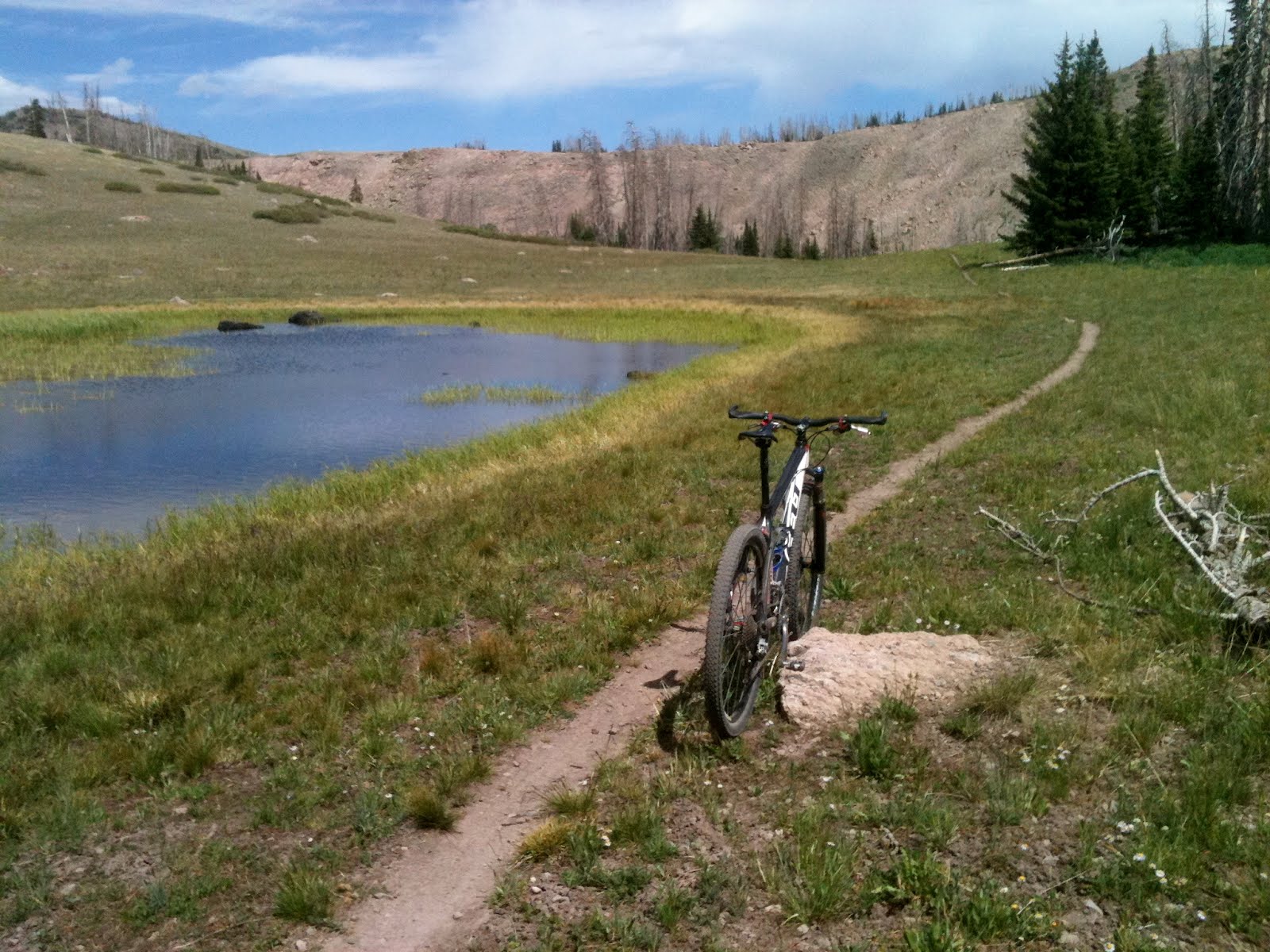
Near the end I finally hit some proper trail. It was beautiful, making me glad I’d persisted. And while the little adventure added to my overall fatigue it did kick me back into my default mode and out of the bizarre reality that comes from any trip to Vegas. And while I survived another Summit in reasonable fashion, one of this years I'm going to nail it and finish stronger than when I started.
Friday, June 22, 2012
Is 50 The New 20?
 pic: tom evans, el cap reports
Another for the “age doesn’t mean shit” files, my friend Hans has once again set the speed record on The Nose of El Capitan. At 48, the full-time father with a full-time job has somehow found time to get faster than he’s ever been and smashed the record by more than 13 minutes. He’s first set the record in 1990 and each time it’s been broken he’s gotten it back--more than 20x over the years. After failing to recapture it last fall he trained through the winter and nailed it on the first attempt. Huge congrats to Hans Florine and his partner Alex Honnold (who capped what’s probably the most impressive single month in the history of Yosemite) for your Friday Psyche.
There’s a great photo account of the ascent on Tom Evans’ El Cap Reports site. Click below for the play by play:
I got up real early, as the day was predicted to be a hot one, and motored down to ElCap at about 5:30am. Fortunately for the climbers and unfortunately for me, they planned to climb completely in the shade for the entire route. That made photography difficult but I figured I could take a stab at it and maybe get lucky with some good shots.
The place was already filling up with spectators hoping to be on hand to watch a new record set on the Nose. They were not to be disappointed! Alex and Hans started at 5:52am as noted by the cheers of a couple dozen of the people who had walked to the base with them.
I’ve reported on Hans’ exploits on the Nose for years. If you’re interested in the history of the climb I recapped it here:
History of Speed Climbing The Nose
More and more we’re seeing athletes age without losing their top-end speed, or even getting faster. And while there are some facts on growing old that we can’t ignore it’s certainly clear that the limitations once imposed by professionals are being pushed further and further back.
Wednesday, June 20, 2012
No Meat? No Problem.

In the wake of last week’s post on vegan boxing champion Timothy Bradley comes an article from the NY Times asking the question Can Athletes Perform Well On A Vegan Diet? While the champ offers an anecdotal yes there are further considerations, which is where Gretchen Reynolds’ piece begins by questioning three nutrition experts about what might be missing should one go meatless. This, of course, begins with protein.
You do have to be diligent about protein intake if you’re vegan. I have clients, especially women, who say, ‘Oh, I put a few chickpeas in my salad.’ But that’s not going to do it. Women need about 60 to 90 grams of protein a day, and athletes are on the high end of that. That means you have to eat cupfuls of chickpeas. And you can’t eat a quarter of that cake of tofu. You need to eat the whole thing. It’s not that there aren’t good sources of vegan protein. But it’s not as bioavailable as meat. So you need to have more.
Most of you are already aware of the protein issue but other things, such as B12 weight loss, and creatine are also evaluated. It’s a quick read, and not all that earth shattering, but weighs the issue with a healthy dose of common sense.
I like to tell people that if we got most Americans to eat one less serving of meat every day, there would be far greater impact from that, in terms of improving overall public health and the health of the planet, than convincing a tiny group of endurance athletes to go full vegan.
And while the article focused on endurance parameters only, leaving Bradley alone as the torch bearer for power athletes, all experts agree that it’s possible to get all of your nutritional needs without meat and dairy, something that heavily-lobbied USDA isn’t ready to admit yet.
Saturday, June 16, 2012
The Best Article Ever About...
...basketball, although it can be applied to anything. If you’ve been watching the NBA finals, which you probably haven’t if you read my blog, you’ll notice one conspicuous name amongst those you’d expect to star in each game: Shane Battier. He was the subject of an article written a few years back by Michael Lewis (author of Moneyball) that was called by many people I know one of the best articles they’ve ever read, which includes praise from people who hate the game of basketball. It’s a fascinating take on the game, and life in general, and is getting dusted off because of Battier’s play in the finals, where he’s actually been getting mvp consideration in reader poles so far.
The article is titled The No Stats All-Star and is more a homage to intelligence than anything else. Battier views the game differently than almost anyone. And even though he rarely does much that makes highlight reels his teams almost always win. It’s fascinating. So much so that to me, someone’s who has been around the game my entire life, it’s more exciting than highlights like this.
Battier’s game is a weird combination of obvious weaknesses and nearly invisible strengths. When he is on the court, his teammates get better, often a lot better, and his opponents get worse — often a lot worse. He may not grab huge numbers of rebounds, but he has an uncanny ability to improve his teammates’ rebounding. He doesn’t shoot much, but when he does, he takes only the most efficient shots. He also has a knack for getting the ball to teammates who are in a position to do the same, and he commits few turnovers. On defense, although he routinely guards the N.B.A.’s most prolific scorers, he significantly ¬reduces their shooting percentages. At the same time he somehow improves the defensive efficiency of his teammates — probably, Morey surmises, by helping them out in all sorts of subtle ways. “I call him Lego,” Morey says. “When he’s on the court, all the pieces start to fit together. And everything that leads to winning that you can get to through intellect instead of innate ability, Shane excels in. I’ll bet he’s in the hundredth percentile of every category.”
In this typical Battier highlight, he appears to get schooled by Durant. A lesser player, however, would have also fouled, which would likely result in giving up 3 points instead of two and also stopped the game clock with Miami leading and time winding down. It’s one of the invisible strengths Lewis is talking about.
It’s a fairly long read but certainly worth your time. Psyche isn’t all about frenetic, hard driving action. There’s plenty to be inspired about keeping ones wits about them, especially under pressure.
Friday, June 15, 2012
See You At Beachbody Summit!

I’ll be doing two presentations at the Beachbody Summit next week. If you’re around on Thursday, stop by the Core area at either 12 or 5 to catch the act. These two sessions will preemptively answer a lot of questions about our products and, basically, help you become a more efficient coach.
I’ll also be at the usual venues, parties, etc, as well as Certification the two days prior to Summit’s official start. You can catch me anytime for a chat but, given there will be more than 5,000 of you this year, that’s going to be more problematic than in years past. So come by Core on Thursday or, better yet, come early and get P90X Certified and I’ll load you up with information that will take your coaching to a higher level.
Here is some information on my two presentations. Click on the highlights for more:
How to put your customers in the right exercise program.
I can state how much easier this will make your job. With the right program you’ll get results as easily as A, B, C. With the wrong one you can struggle and get frustrated and spend a lot of time looking for answers. Choosing the right program is step 1 in getting the best results.
How to recommend the right supplements for the right program.
Supplementation are a key part of your tool kit for results. They aren’t magic but can seem like it when used correctly. Every supplement has a purpose and understanding what it is and how it fits with a customer’s goals is a key part of finding success. I'll also be going over some of our newer supplements, like E & E and the new line designed for Beast, which can be utilized elsewhere to help maximize your training.
Efficient coaching.
Learning where all of Beachbody’s resources to help you educate and motivate your customers are located and how to use them will not only ensure your customers reach their goals but save you valuable time.
Finally, consider getting certified. The more you know about the science behind the creation of an exercise program, the more effective you'll be at teaching it. This is particularly true for P90X , which is both versatile and complex, and can be utilized and structured various ways based on the needs of the individual client. You’re coming to town anyway, so why not add this to your coaching arsenal?
See you next week!
pic: summit's always rife with photo ops but this pic, from a coach trip in france, is posted for another reason. i'll have both road and mtn bikes in tow and need to train so hit me up if dawn patrol intervals sound fun. i'll go climbing at least once during the week, too, if you want to pack yer boots.
Wednesday, June 13, 2012
3 Weeks Of Hell
“Training sucks,” said my friend/mechanic/bike shop owner/climber/drinkin’ buddy Tyson the other day as I was dreading heading out for my first interval session on the bike this year. “Riding bikes is great,” he continued. “But training is terrible.”
“It’s only three weeks,” I countered. “That’s what it always takes to transition to a base of fitness where it’s no longer miserable. But it’s three weeks of hell.”
I’ve been putting off writing this blog—perhaps dreading is a better word—because once it’s published I have to do it. And while I’m often so excited about training that I can barely keep from overtraining out of the gate this is not one of those times. I can’t seem to change my mindset and am not sure exactly why. Maybe I’m more psyched on climbing. Maybe exploring trails sounds more fun than repeated intervals. Maybe I’m just old. But for whatever reason I’m looking forward to the Butte race with about as much enthusiasm as a colonoscopy.
But I stated last week that I’d write up an example so here it is. Besides, I’ve been doing it anyway. And while it hasn’t been pretty, and every morning I wake up feeling as though I was in a bar fight even though I’m ramping up intensity very slowly, I will sally forth and record the results for posterity. ‘Cause that’s my job and, to be honest, I love it even when I hate it because in the big picture it’s another experience to reflect on and learn from.
So here ya go; a glimpse at race build-up from 7-weeks out (while concurrently training for climbing). To understand the reasoning you need to read the backstory here:
The 5 Most Important Factors of Race Training
Week 1 (went like this)
Day 1 – Long mtb ride: a little over 3 hrs of saddle time and a few thousand feet of climbing. Felt hard, especially after 2 hrs. Long road ahead. Did easy yoga and a little foam rolling.
Day 2 – 4 X 10 min intervals full-on with 5-7 min rest in between. Did hill repeats on mtb. Felt weak, miserable. Still sucked it up for some NIS stretching and a 20 minute core workout afterward.
Day 3 – 45 min aerobic spin on the fixie and easy yoga. Went climbing all day.
Day 4 – Biking rest. Climbed half a day. Did easy yoga.
Day 5 – Easy 1 hour mtb ride on trails. About 1,000’ of climbing done easily spinning. No hard efforts. Nice ride. Slacked on post-ride stretching.
Day 6 – 2 X 20 minute full-on intervals. 15 min rest in between. Two long hill repeats. Felt horrible and slow but could feel a slight power improvement from previous workout. Abridged stretching session. Easy recovery climbing in the PM. Blew off both foam rolling and planned full body workout session. Dumb but seriously lacking motivation.
Day 7 – 1 hr RUKE (run/hike), no bike. Hard climbing/training session. Asylum Strength. NIS stretching and foam rolling. This is today. Enthusiasm is a bit higher writing it, probably thanks to reading an old Ben Moon training dairy this morning. Remains to be seen how it goes.
Evaluation from week 1. It happened and that’s a start. Need to get much better at restorative stuff: foam rolling/yoga/core/stability work. Hopefully psyche will perk up.
Going forward this is my template. Each week to consist of:
2 hard targeted bike workouts, always some type of intervals. Goal is to slowly increase these to 4 X 15 min and 2 X 30 minute of all out climbing. These workouts are highly stressful and require a lot of recovery so my daily recovery modalities, supplementation, and diet need to improve.
1 long ride. Saddle time is sorely lacking. Bonked after hour 3 on first ride. I need to be able to do 8 hours without a thought because that's probably where Butte really gets started.
2 recovery rides. Hopefully these are nice trail rides. Lots of spinning and work on technique.
Daily mobility work – either foam rolling or yoga, hopefully both. All of my down time (TV, movies, post-ride beer, etc) should be utilized to work on this weakness. Week 1 was not nearly good enough.
Core and stability work – done post climbing workouts, 2 X per week.
Full body training – One Asylum/P90X2-type workout each week to stay sharp. One hard resistance/agility/plyometric workout during the week helps hormonal production stay high provided recovery is going okay, so this is evaluated on the fly.
Climbing – 3 sessions per week, 2 of them hard. Either outside or in the Coop. Currently climbing outside a fair amount but might move towards hangboard training as bike volume gets high because it takes less total energy output—plus is better training than climbing anyway.
2 weeks away from the race I’ll do a big test, then taper towards race day. The general pattern is 3 weeks of hell followed by a shift in mindset and inspired training. But we’re not machines and things always go a little different, and that’s where all this training stuff gets interesting. I’ll report back after Butte with the results.
Monday, June 11, 2012
The Vegan Champion
Congratulations to Timothy Bradley for his victory over boxing legend Manny Pacquiao this weekend, making him the undisputed vegan world champion. While there are a number of celebrated endurance vegan athletes, notable vegan power athletes (like Mike Tyson and Carl Lewis) have up-until-now been retired. Power sports have long been a carnivore’s domain but there’s a new sheriff in town and, with him, a modern template for addressing performance nutrition.
“Dude, I swear it’s the most unbelievable feeling ever,” Bradley said, praising the diet he believes would give him a definite advantage in the ring.
“The reason I love it so much is I feel connected to the world. My thoughts are clearer, crisp. I am sharp. Everything is working perfectly. I feel clean. It’s a weird feeling, man, it’s just a weird feeling.”
Bradley was already a champion but moving up in weight and beating Pacquiao will make him a household name. He isn’t a full-time vegan but that shouldn’t discourage his testament to nutrition because he gets strict when he’s training for a fight, which is where most vegan detractors stake the foundations of their rationale; at the pinnacle of performance. In fact training is exactly where our diet should be tested because what works for the highest-levels of performance is the template we want to use as a base. In the below video he talks about where he gets protein, stating “I don’t really take that much protein,” busting a popular notion of what it takes to be ripped. In the great HBO 24/7 (top video) series he talks about having stores of excess energy, so much that he doesn’t need much sleep even though he’s training 5 or 6 hours per day.
bradley talking about getting protein as a vegan
The main knock on veganism and power sports has always been that you need animal proteins for absolute strength. And while it might be true that the amino acid profiles of meat make this easier to get the proper amino acid ratios the science isn't valid because you can do it without meat and dairy. All that’s been lacking for the public has been a real life role model.
If you’ve followed Beahbody’s diet plans you know we tend to begin with high protein (or low carbs) and graduate towards much less protein/more carbs as you get fitter. This is more as a personal training tool than anything else (though not totally as restricting carbs on an exercise program teaches your body to metabolize fat as fuel more efficiently) because most people eat too many bad carbs and once you learn the relationship with carbs and energy in your diet how to eat becomes much easier. The fact is that your body does not utilize protein very efficiently and beyond a certain amount you’re not utilizing it as protein anyway. It’s vital, and you absolutely need it all day long, but healthy vegans eat mainly whole foods and the beauty of nature is that in their natural state most foods have a solid balance of proteins, fats, and carbs. The more your diet is based on whole foods the less you need to worry about macronutrients because nature will do that for you. A whole food vegan would likely have little need for our basic plans, which is why you currently only find a vegan option to the high-end nutrition plans like P90X2.
The science-based detractors of veganism are losing steam all the time. In an article on Bradley’s diet the Philippine Daily Inquirer interviewed some professionals trying to poke holes in his plan. Nutrition coach Jeaneth Aro stated:
“A well-planned vegan diet can provide all the protein requirements of an athlete in much the same way as a regular diet. However, the major consideration for the vegan athlete is the availability of energy during high intensity exercise. Plant-based protein sources are also high in fiber. Fiber delays the digestion of food, hence the absorption of nutrients."
And while it sounds intriguing there’s not much logic to it unless Bradley is munching on carrots in between rounds, the only time when delaying the timing of nutrient delivery would be a hindrance. With modern food prepping, such as juicing (or vegan Shakeology), arguments like this hold virtually no meaning. Certainly there are nutritional considerations you must address when you’re vegan, especially if you eat a lot of packaged and convenience foods that are stripped of whole food nutrition. But that’s not as much a condemnation of veganism as it is about the Standard American Diet (SAD).
Granted, Bradley didn’t exactly mop the floor with Pacquiao. The result is one of the most disputed in boxing history and most observers seem to think Pacquiao won. But all that means is that they'll fight again, which is more focus, scientific scrutiny, and popularity for vegan eating. So all I have to say about the rematch is bring it on.
if you don’t watch to watch the entire series, the vegan clip is at 6:35 here in part 3
Friday, June 08, 2012
Kids These Days
I know I’m supposed to continue on with Santa Barbara’s climbing history but have been too busy so I’m dusting off an old video of Chris Sharma doing what, at the time (2001), was the hardest route in the world. It’s in the news because today Adam Ondra got a camera crew together and tried to flash it, which is simply ridiculous.
He didn’t, so at least there is something in climbing he can’t do, but this thing just seemed so far out there when Chis did it that even the attempt is almost impossible to fathom. He did manage to flash the first pitch of the route, which had never been done, falling on the final crux. All I have to say about this is “Hey, kid, get off my lawn.”
here's a video of the attempt.
Thursday, June 07, 2012
The 5 Most Important Factors Of Race Training

I get a lot of questions from people using our programs who want to transition to training for a race or other athletic event. And although this is my absolute forte it’s still the trickiest part of my job. Not only do individuals vary greatly but there’s no perfect formula, even if you’re a professional with a full-time coach. Throw in jobs, families and other stress tests facing the average weekend warrior and training for an event becomes a crapshoot. This is the reason I’m always tinkering with something new. However, there are 5 factors that you should always assess before you do anything else.
In 7 weeks I’ve got a 100-mile mountain bike race billed “the most difficult in the country”. Last week I received the race bible and now I know why. It’s not the 20,000’ of climbing—-no picnic on any bike—-but things like “4 miles of loose sandy climbing” that have me worried. That and the fact that I’ve barely had time to train. If work allowed for serious saddle time things would be simpler but that seems unlikely. I’m also focused on other sporting goals (climbing), which is another obstacle facing the multi-sport weekend warrior. With these caveats in mind, here’s how I figure out what to do.
1 Start with a goal
You should always begin designing your training plans around a goal and then work backwards. While my true objectives are in the fall (like always), this race is so hard that if I treat is like just another training day I could get injured. So, for the purpose of this training cycle, The Butte 100 is my ultimate goal.
Which means: A 7-week training cycle – 5 week build-up to a hard test two weeks out, then a graduating taper to race day
2 Assess injuries
A recent bike fit moved cleats back on one foot, which happened to be my injured leg, meaning I may have been exacerbating the injury. It also showed my leg length discrepancy was back. This I knew because my mobility training hasn’t been consistent and it’s been the pattern. While both issues cite sloppiness on my part at least I’m not injured right now, so maybe I’m lucky that I haven’t been training harder.
Which means: Back to the daily foam rolling and hip stability training, along with visits to the physio.
3 Assess free time
As stated not a lot. I can probably eek out 10-12 training hours per week that must be shared between three sports: riding, climbing, running.
Which means: 7 hours a week saddle time but willing to increase this for one long ride per week up until week 5.
4 Assess fitness base
My general training keeps my base very fit, which I go into great detail about in this post. Though time in the saddle is lacking I’m reasonably strong and feel like I’m turning a bigger gear than normal during the early season. I don’t have a lot of weight to lose or need to gain any general fitness. I just need to integrate my training to sports specific movements. This is a huge advantage.
Which means: My training time can focus on specificity and my indoor workouts can be for maintenance only. This is a big time saver and the justification for a solid off-season training program like P90X2.
5 Assess the goal
20,000’ of climbing, much of it on loose sand, means that to survive I’m going to need some excess pedaling power. Other than that the course doesn’t look particular technical or challenging, at least not in a way I need to specifically train for.
Which means: Training should be fairly straightforward, focused on hill climb intervals. Ouch.
With these 5 factors assessed I’ve greatly simplified the process and am now ready to create a training schedule. I’ll post the results next week. Now posted here.
 pics: training distilled to more of one (hard riding) less of the other (taqueria post bike prom riding)
Subscribe to:
Posts (Atom)