Maybe this is a lame "blog" post but it's important so I'm sort of spamming it through all the means that I have. It's essentially a plea for help concerning access to our public lands. They are being threatened in a manner that appears to be environmental but is, in actually, an insidious threat to our environment and the animals it's supposed to be protecting. Please take the time to read and help out.
Over the years I've dealt with this issue quite a lot as a climber/activist. Every time I've developed a new climbing area I've approached the land use management of the area to secure our access to the cliffs involved. This has often, if not always, addressed the situation of the local bird species.
What we've found is that climbers--and other outdoor user groups, especially those that don't use motors--obstruct animal habitat very little, especially when compared to the natural impact of society via pollution, road and building development, and so forth (which is true even when development is adjacent to an area, such as National Forests). Even the motorized user groups, as well as hunters, do very little to negatively affect species when compared to the above.
In fact, when compared to urban spawl and other sorts of wilderness encroachment, it's can be easily argued the climbers, hikers, etc have an overall positive effect on the environment, especially the longevity of plant and animal species.
Furthermore, the only hope that we have of enacting truly protective legislation over time is by creating more public awareness (and, hence, votes). By closing access to our public lands we reduce our chances to create public awareness.
Exposing people to nature and wildlife is, by far, the most effective and powerful means of motivating people to protect our environment. This has been proven with studies using inner-city kids. It's an out of sight, out of mind mentality. But the vivid imagery of the wilderness stays in the mind long after one is exposed, leading to serendipitous environmentalists.
Our land use management has been under fire due to budget cuts (especially under the current administration) which has forced them into a reactionary status of involvement. The reason that they support these closers is simple; it's easy. It's also "safe" in that our legal and management system is messed up to the point that a ranger can be personally liable for non-protection of an area. If this sounds insane, well, it is. But we're dealing with this exact situation in the Angeles National Forest currently.
What this does is create stupid blanket policies to "protect" species which, in turn, lowers public awareness which, in turn, makes it easier for developers to ultimately get their hands on these lands. If you don't believe me just do a little hoof work to see how our lands are getting sold off to developers. It's insidious. It affects our lives, our children's lives, and threatens the very species of plants and animals that it is supposedly there to protect.
Thanks for reading. Now see below.
Hi Everyone,
This affects all of us. While it appears to be about San Diego county only, if it's allowed to go through it could set a precedent that could affect all public lands. Keep in mind that I'm a conservationist and would support legislation that would help animals. This, however, is just government being lazy and, in the end, will end up hurting the species. Feel free write me if you want more explanation about how (or maybe I'll blog about it.)Either way, read below.
Thanks for your time!
Steve
-- Instructions Below --
Deadline for public comment ends on January 12, 2007
The Cleveland National Forest in San Diego, California is about to impose access closures to ALL forms of recreational use at four National Forest areas: Corte Madera Mountain, El Cajon Mountain, Rock Mountain, and Eagle Peak. Very alarming is that this information is not available to the public via the Forest Service website, the Federal Register, or SOPA (Schedule Of Proposed Actions) as required within the National Environmental Protection Act of 1969.
These closures will ban ALL human activity within a "½ mile radius of any current or future golden eagle, prairie falcon, "or "other cliff-nesting species" nests, even though these "other" species types are not explicitly identified in the proposed closures. However, given that the closures are in part being based on the Migratory Bird Treaty Act of 1916, of the over 800 birds listed, many are quite common such as the swallow, hummingbird, and raven. The results could be catastrophic by not only closing local areas, but establishing legal precedent for widespread closures across all U.S. National Forest! These closures affect climbers, hikers, backpackers, mountain-bikers, horseback riders, and off-road enthusiasts alike, setting legal precedent to close off multiple recreational areas within any National Forest!!!
Join this important letter writing campaign (instructions at the bottom) and tell the Cleveland National Forest that you oppose all closures of this type! If no comments are received during the public comment period, the Forest Service will assume that we support their proposals and they will close our recreational areas.
Tell the Cleveland National Forest that you oppose these closures because:
These closures are inconsistent with the USFS multiple use mandate, "as set forth in law" to meet the diverse needs of people,†and as such do not adequately take into consideration the unique value of climbing, hiking, backpacking, mountain-biking, horseback riding, and off-roading on forest lands.
The Forest Service is misinterpreting its legal authority to use the Migratory Bird Treaty Act (MBTA), together with the Golden Eagle Protection Act, to close large tracks of our public lands for passive uses, be it hiking, riding, picnicking, or rock climbing. This is a radically extreme method to limit recreational use on our public lands given that the MBTA was initially entered into by congress in 1916 to prevent the over-commercialization of migratory birds.
In particular, the Corte Madera proposed closure is being based on the "historical" presence of eagles since golden eagles have not nested there for over 15 years. As such, this measure is extreme and onerous and based on unscientific reasoning.
The proposed closure limit distances are arbitrary because they are not based on exact nest locations, not accurately depicted from presumed nests on the USFS closure proposal maps, or based on sound scientific evidence.
The Golden Eagle and Prairie Falcon are not threatened or endangered species and therefore do not need drastic protection measures like these closures to breed successfully.
Climbers, Hikers, and other National Forest users have co-existed with wildlife peacefully for decades; therefore, among other factors, changing climate conditions and decline of natural prey populations are more likely to blame for any suspected loss in bird numbers.
These closures are inconsistent with bird closure precedent already established nation-wide.
Simply cut-&-paste the above reasons to TWO separate letters (added comments definitely help)
Title each of your letters separately (it is VERY IMPORTANT that the titles are accurate)
First letter -- Comments to proposed seasonal closures at Corte Madera Mountain & El Cajon Mountain
Second letter -- Comments to proposed seasonal closures at Rock Mountain & Eagle Peak
Send directly to the Cleveland National Forest at:
Kirsten Winter
Cleveland National Forest
10845 Rancho Bernardo Rd #200
San Diego, Ca 92127
********************************************
IMPORTANT UPDATE!!!!
********************************************
If you e-mail your response and it kicks back,
your comment will not be recognized or counted...if this happens you
either MUST send in a hard copy, or forward it to
<mailroom_r5_cleveland@fs.fed.us> Attn. Kirsten Winter. This way if
her system crashes (I certainly hope it does), all your VERY IMPORTANT
comments will be saved, counted, and make a difference!
And hey, if their mailroom server crashes, all the better...annnnnnnd,
should this actually happen to you (wouldn't that be great...let's
shoot for it), please send in a hard copy letter anyway...I say we run-up the
scoreboard on this one!!!
Print tons of copies and pass them out to everyone you see over the
holidays!
p.s. personally, I think a hard copy letter mailed in is always better
(heard once that agencies equate ten e-mails to one actual letter), but
whatever works for you, just please, please, please get those comments
in before January 12th!!!

Thursday, December 21, 2006


Saturday, December 16, 2006
World's Qualifying Events
Thinking maybe I'll dust off the old time trial bike and get back to some racing this year. I never race too much but like 'em to matter when they do. Here are the Team USA qualifying events this year. Unfortunately, my best event, Short Course Du, would require me to begin training right now. Ah, I'm sure snowboarding will substitute just fine.
See you at the races!
Short Course Duathlon
Seven qualifying events for 2007 Short Course Duathlon World Championship in Gyor, Hungary, May 20, 2007
Qualification: 3 spots per age group- roll down to 10th place
Frost Yer Fanny Jan 21, 2007 Austin, TX
Desert Classic Duathlon Feb 25, 2007 Fountain Hills, AZ
Virginia Duathlon April 1, 2007 Virginia Beach, VA
Powerman Alabama April 15, 2007 Birmingham, AL
Long Course Duathlon
Three qualifying events for 2007 Long Course Duathlon World Championship in Richmond, VA, October 21, 2007
Qualification: 3 spots per age group- roll down to 10th place
Striders Duathlon April 21, 2007 San Angelo, TX
World's Toughest Duathlon May 20, 2007 Auburn, CA
Blackwater Traverse Du July 8, 2007 Cambridge, MD
Qualification: 6 spots per age group- roll down to 10th place
USAT National Long Course Duathlon Championship--Powerman Ohio
Sept 30, 2007 Mansfield, OH
Long Course Triathlon
Seven qualifying events for 2007 Long Course Triathlon World Championship in L’Orient, France, July 14-15, 2007.
Qualification: 3 spots per age group- roll down to 5th place
White Lake Half May 5, 2007 White Lake, NC
Qualification: 2 spots per age group- roll down to 10th place
Deuces Wild Triathlon Festival June 3, 2007 Show Low, AZ
Mooseman Triathlon- Half June 3, 2007 Waterville Valley, NH
Georgia Rock’n Roll Man June 3, 2007 Macon, GA
See you at the races!
Short Course Duathlon
Seven qualifying events for 2007 Short Course Duathlon World Championship in Gyor, Hungary, May 20, 2007
Qualification: 3 spots per age group- roll down to 10th place
Frost Yer Fanny Jan 21, 2007 Austin, TX
Desert Classic Duathlon Feb 25, 2007 Fountain Hills, AZ
Virginia Duathlon April 1, 2007 Virginia Beach, VA
Powerman Alabama April 15, 2007 Birmingham, AL
Long Course Duathlon
Three qualifying events for 2007 Long Course Duathlon World Championship in Richmond, VA, October 21, 2007
Qualification: 3 spots per age group- roll down to 10th place
Striders Duathlon April 21, 2007 San Angelo, TX
World's Toughest Duathlon May 20, 2007 Auburn, CA
Blackwater Traverse Du July 8, 2007 Cambridge, MD
Qualification: 6 spots per age group- roll down to 10th place
USAT National Long Course Duathlon Championship--Powerman Ohio
Sept 30, 2007 Mansfield, OH
Long Course Triathlon
Seven qualifying events for 2007 Long Course Triathlon World Championship in L’Orient, France, July 14-15, 2007.
Qualification: 3 spots per age group- roll down to 5th place
White Lake Half May 5, 2007 White Lake, NC
Qualification: 2 spots per age group- roll down to 10th place
Deuces Wild Triathlon Festival June 3, 2007 Show Low, AZ
Mooseman Triathlon- Half June 3, 2007 Waterville Valley, NH
Georgia Rock’n Roll Man June 3, 2007 Macon, GA
Tuesday, December 12, 2006
Everything You Wanted To Know About Doping For Sports
Not exactly everything but I promised a long post about doping back during the Tour and, in the midst of all the controversy, decided to let it play out for a while. Currently, what we have is a quagmire of points, counterpoints, accusations, suspensions, and court cases. Basically, the situation is a mess.
I'm going to provide a lot of links. If you're not up for reading, I'll also summerize. But if you're truly interested in the details of sports doping I encourage you to read through everything. Particularly these LA Times articles:
Cyclist Blames Flawed Tests (on Tyler Hamilton)
The Innocent Often Pay A High Price
Are Appeals Futile?
The Times stories scrutinize the testing processes and many flaws are exposed. Tyler's case is particularly interesting because the testing procedure used to "bust" him had only recently been established and not really substantiated. Furthmore, it was done by an Australian university on a $50,000 grant--hardly enough money to come up with an iron clad testing procedure. At the Olympics, where Hamiltion first tested positive, many officials had protested the use of the testing procedure saying "it's not ready for prime time." Furthermore, the way his positive test was revealed would not yield him any performance enhancement. The case is even more bizarre because only one other positive test has ever been made and this happened during the same race as his second positive (the Vuelta a Espana). That rider, Santi Perez, has claimed he was innocent but said he didn't fight it bascially because he couldn't afford it. This last bit is not in that article but similar cases are revealed in the other piece.
The next two articles basically analyze the problems in the system, how doping cases can happen with over the counter medications and result in bans, mainly against athletes that can't afford to fight them.
"'It wiped out my life savings and my college savings,' Zach Lund, 27, a world-class skeleton sled racer from Salt Lake City, said of his effort to clear himself of doping charges."
We know that athletes are doping but more and more it looks as though WADA (World Anti-Doping Agency), and particlularly its chairman, Dick Pound, are on a bit of a witch hunt. In a doping seminar I attended last year I was particularly un-impressed by the answers I got about problems within the system.
"If athletes dope, we will catch them," was the message given. However, I--and many others in attendance--know of athletes who've doped and not been caught. And there are many cases of others who have not been doping and have been caught. Clearly, we've got issues.
Public Perception
When George Bush claimed that doping in sports was one of the major problems in our society he was clearly blowing a smoke screen at the public to cover our problems in the Middle East. The problem is that most people don't know this, creating an image that scientists are creating Fraken-athletes in order to achieve all-important victory. This could not be more wrong and it's created an alarmist tone to which society is forced into a reactionary state. Orgainizations like WADA are then forced to get "results", even if they are wrong. Who ends up getting hurt, more often than not, are the "little guys" like the amateur athletes in obscure sports who can't afford to defend themselves.
For example, no one has had more doping accusations surrounding them than Lance Armstrong. A lesser-funded athlete would have little chance against such pressure but the Armstrong machine--which is vast--has been able to deflect all criticism and win again and again in court. Armstrong himself is probably worth more money than WADA's entire budget and they probably stand little chance in court against his lawyers.
Who doesn't, however, are athletes like Rachel Burke:
"For people who have never had to deal with something like this, it's hard to grasp what it takes away from you," says Rachael Burke, 23, a swimmer at the University of Virginia, whose urine sample turned up in May 2004 with a trace of boldione, an obscure steroid, possibly from a contaminated nutritional drink. Burke had never had a positive result in any other test in more than a decade of competitive swimming.
"You have no idea what happened," she recalled in an interview. "You have no control over the fact that they are going to announce to the entire public that Rachael Burke, this girl that everyone has seen grow up in the spotlight, has tested positive for steroids. The next day, you have to walk on the pool deck and people are saying, 'I wonder if that's why you were so good when you were 8 years old.' You're accused and convicted without a chance to defend yourself."
What we really need to understand is her point about an 8 year old's talent. 90-some-odd percentage of an athlete's ability they are born with. Doping is a very very small piece of the pie. Most of us could dope to the gills and never even hope of riding in the Tour de France. Athletes are born, then made. But mostly born. It's estimated that the advantage an athelete can gain by doping is 3%. An athlete like Armstong is born with more than twice the average V02 Max of the average person. (For example, he crushed the field in his first race as a kid, when he certainly wasn't doping.) Other factors, like aerobic capacity and efficiency can be increased to 12% or more through training. Diet can further add to this. Therefore, doping is a problem in that it's an unfair advantage over similarly-talented athletes who've already maximized their talent and nutrition, but it's hardly one of the greatest problems in our society.
To understand doping on its most basic level, here's an article I wrote:
Drugs, Food, and Supplements
Operation Puerto
On the eve of the Tour de France, Operation Puerto was revealed to the world, which led to accusations of doping against 58 pro riders and many riders being banished from the race, including the four favorites. None of these riders competed in the Tour but, over time, almost all of Puerto's evidence has been discounted. Still, many of these riders are under fire and have had their careers damaged.
Cycingnews Puerto Archive
This is one of the craziest sports scandals of all time. For Americans, imagine half the teams getting kicked out of the NFL playoffs and banned to two seasons for doping, only to be reinstated in July because the evidence was un-sound. This is essentially what has happened. Would you say there is a problem with the system? Um, likely.
Landis
Adding to the irony was that the eventually Tour winner was then kicked out for doping. And after the fact as well. His appeal looked absurd at first but has picked up steam, and mainly because they've proven that the lab used poor procedure in handling his urine sample. If nothing else, his case has further proven that the situation is a mess. WADA does not catch all dopers. From scuttlebutt ones hears at the fringe of sports--where I reside--it appears that they catch very few offenders. It's also clear that "catch" quite a few non-offenders.
The Solution
Here's where you've got me. I truly have no idea. It's a problem in sports, for sure. But is it worth all our time and effort to uncover? I don't know. Here's what I do know.
Doping ain't what it once was. Back in the day of back alley steroids and random EPO injections it was dangerous. Nowadays, it's generally doctor administered and could be argued, as was the case in the Puerto incident, that's it makes the athletes healthier. Back alley abuses among amateurs still exists but, let's fact it, it always will. These people will take anything at all to enhance performance and don't really care about health implications. And you can kill yourself, quite easily, with perfectly legal supplements and foods if you try hard enough. For example, I deal with clients who OD on junk like Red Bull, et al, regularly and all they're trying to do is look good at a family reunion.
Doping doesn't make athletes. Like I said before, you can only improve so much. If you didn't run away from all the kids at grade school, no amount of dope is going to help you win even a high school championship, must less get you to the Olympics.
Dope is expensive. Down in the alley they can afford meth, bathtub anavar and other goofy concoctions but nobody at your local cat 4 crit is doing EPO. The reason, it's about a grand per dose. Only very well funded athletes can afford scientific doping.
A simple solution is to take the money out of sports. This would take the doctors out. Once the doctors were gone we could easily control doping because back alley doping won't avoid detection. This, however, is not going to happen anytime soon.
Another possibility is to legalize doping and limit spending on it. Teams would then have to record what they used and when and all abuses and health problems could be revealed. It would also limit the temptation of school kids to dope becaue they'd see that it doesn't change an athlete all that much. While not perfect (because it can be cheated--what can't?), this option might be the most realistic. But when the President of the United States is calling sports doping more important than a war in the Middle East, who's going to stand up and make that call?
I'm going to provide a lot of links. If you're not up for reading, I'll also summerize. But if you're truly interested in the details of sports doping I encourage you to read through everything. Particularly these LA Times articles:
Cyclist Blames Flawed Tests (on Tyler Hamilton)
The Innocent Often Pay A High Price
Are Appeals Futile?
The Times stories scrutinize the testing processes and many flaws are exposed. Tyler's case is particularly interesting because the testing procedure used to "bust" him had only recently been established and not really substantiated. Furthmore, it was done by an Australian university on a $50,000 grant--hardly enough money to come up with an iron clad testing procedure. At the Olympics, where Hamiltion first tested positive, many officials had protested the use of the testing procedure saying "it's not ready for prime time." Furthermore, the way his positive test was revealed would not yield him any performance enhancement. The case is even more bizarre because only one other positive test has ever been made and this happened during the same race as his second positive (the Vuelta a Espana). That rider, Santi Perez, has claimed he was innocent but said he didn't fight it bascially because he couldn't afford it. This last bit is not in that article but similar cases are revealed in the other piece.
The next two articles basically analyze the problems in the system, how doping cases can happen with over the counter medications and result in bans, mainly against athletes that can't afford to fight them.
"'It wiped out my life savings and my college savings,' Zach Lund, 27, a world-class skeleton sled racer from Salt Lake City, said of his effort to clear himself of doping charges."
We know that athletes are doping but more and more it looks as though WADA (World Anti-Doping Agency), and particlularly its chairman, Dick Pound, are on a bit of a witch hunt. In a doping seminar I attended last year I was particularly un-impressed by the answers I got about problems within the system.
"If athletes dope, we will catch them," was the message given. However, I--and many others in attendance--know of athletes who've doped and not been caught. And there are many cases of others who have not been doping and have been caught. Clearly, we've got issues.
Public Perception
When George Bush claimed that doping in sports was one of the major problems in our society he was clearly blowing a smoke screen at the public to cover our problems in the Middle East. The problem is that most people don't know this, creating an image that scientists are creating Fraken-athletes in order to achieve all-important victory. This could not be more wrong and it's created an alarmist tone to which society is forced into a reactionary state. Orgainizations like WADA are then forced to get "results", even if they are wrong. Who ends up getting hurt, more often than not, are the "little guys" like the amateur athletes in obscure sports who can't afford to defend themselves.
For example, no one has had more doping accusations surrounding them than Lance Armstrong. A lesser-funded athlete would have little chance against such pressure but the Armstrong machine--which is vast--has been able to deflect all criticism and win again and again in court. Armstrong himself is probably worth more money than WADA's entire budget and they probably stand little chance in court against his lawyers.
Who doesn't, however, are athletes like Rachel Burke:
"For people who have never had to deal with something like this, it's hard to grasp what it takes away from you," says Rachael Burke, 23, a swimmer at the University of Virginia, whose urine sample turned up in May 2004 with a trace of boldione, an obscure steroid, possibly from a contaminated nutritional drink. Burke had never had a positive result in any other test in more than a decade of competitive swimming.
"You have no idea what happened," she recalled in an interview. "You have no control over the fact that they are going to announce to the entire public that Rachael Burke, this girl that everyone has seen grow up in the spotlight, has tested positive for steroids. The next day, you have to walk on the pool deck and people are saying, 'I wonder if that's why you were so good when you were 8 years old.' You're accused and convicted without a chance to defend yourself."
What we really need to understand is her point about an 8 year old's talent. 90-some-odd percentage of an athlete's ability they are born with. Doping is a very very small piece of the pie. Most of us could dope to the gills and never even hope of riding in the Tour de France. Athletes are born, then made. But mostly born. It's estimated that the advantage an athelete can gain by doping is 3%. An athlete like Armstong is born with more than twice the average V02 Max of the average person. (For example, he crushed the field in his first race as a kid, when he certainly wasn't doping.) Other factors, like aerobic capacity and efficiency can be increased to 12% or more through training. Diet can further add to this. Therefore, doping is a problem in that it's an unfair advantage over similarly-talented athletes who've already maximized their talent and nutrition, but it's hardly one of the greatest problems in our society.
To understand doping on its most basic level, here's an article I wrote:
Drugs, Food, and Supplements
Operation Puerto
On the eve of the Tour de France, Operation Puerto was revealed to the world, which led to accusations of doping against 58 pro riders and many riders being banished from the race, including the four favorites. None of these riders competed in the Tour but, over time, almost all of Puerto's evidence has been discounted. Still, many of these riders are under fire and have had their careers damaged.
Cycingnews Puerto Archive
This is one of the craziest sports scandals of all time. For Americans, imagine half the teams getting kicked out of the NFL playoffs and banned to two seasons for doping, only to be reinstated in July because the evidence was un-sound. This is essentially what has happened. Would you say there is a problem with the system? Um, likely.
Landis
Adding to the irony was that the eventually Tour winner was then kicked out for doping. And after the fact as well. His appeal looked absurd at first but has picked up steam, and mainly because they've proven that the lab used poor procedure in handling his urine sample. If nothing else, his case has further proven that the situation is a mess. WADA does not catch all dopers. From scuttlebutt ones hears at the fringe of sports--where I reside--it appears that they catch very few offenders. It's also clear that "catch" quite a few non-offenders.
The Solution
Here's where you've got me. I truly have no idea. It's a problem in sports, for sure. But is it worth all our time and effort to uncover? I don't know. Here's what I do know.
Doping ain't what it once was. Back in the day of back alley steroids and random EPO injections it was dangerous. Nowadays, it's generally doctor administered and could be argued, as was the case in the Puerto incident, that's it makes the athletes healthier. Back alley abuses among amateurs still exists but, let's fact it, it always will. These people will take anything at all to enhance performance and don't really care about health implications. And you can kill yourself, quite easily, with perfectly legal supplements and foods if you try hard enough. For example, I deal with clients who OD on junk like Red Bull, et al, regularly and all they're trying to do is look good at a family reunion.
Doping doesn't make athletes. Like I said before, you can only improve so much. If you didn't run away from all the kids at grade school, no amount of dope is going to help you win even a high school championship, must less get you to the Olympics.
Dope is expensive. Down in the alley they can afford meth, bathtub anavar and other goofy concoctions but nobody at your local cat 4 crit is doing EPO. The reason, it's about a grand per dose. Only very well funded athletes can afford scientific doping.
A simple solution is to take the money out of sports. This would take the doctors out. Once the doctors were gone we could easily control doping because back alley doping won't avoid detection. This, however, is not going to happen anytime soon.
Another possibility is to legalize doping and limit spending on it. Teams would then have to record what they used and when and all abuses and health problems could be revealed. It would also limit the temptation of school kids to dope becaue they'd see that it doesn't change an athlete all that much. While not perfect (because it can be cheated--what can't?), this option might be the most realistic. But when the President of the United States is calling sports doping more important than a war in the Middle East, who's going to stand up and make that call?
Thursday, December 07, 2006

Tuesday, December 05, 2006
E-Coli Outbreak
E-Coli Outbreak
It's interesting how many people wrote to me after my Fast Food Nation articles wondering if I had stock in the movie or made other accusatory remarks that assumed I'd have no other reason to dis the fast food industry. But when your job is to make the world a healthier place, how can you not?
Case in point:
E. coli outbreak in N.J. is linked to 3 Taco Bells
By BETH DEFALCO
Associated Press Writer
Advertisement
SOUTH PLAINFIELD, N.J. (AP) -- An E. coli outbreak that has sickened at least 22 people - two of them seriously - was linked by health investigators Monday to three Taco Bell restaurants in New Jersey.
Meanwhile, an outbreak of E. coli also sickened more than a dozen people on Long Island, including several who ate at Taco Bell, prompting officials to ask that eight of the fast-food restaurants there be closed. It was not immediately clear if the Long Island E. coli is related to the outbreak in New Jersey.
All of the people who fell ill in New Jersey had eaten at Taco Bells between Nov. 17 and Nov. 28, authorities said. Two employees also tested positive for the bacteria. But exactly what food was contaminated was still unclear.
"We have to find the food they all had in common," said David Papi, director of health for Middlesex County.
All but four of the victims are under 18, authorities said.
Five were in the hospital Monday, including a 10-year-old boy and a 5-year-old girl who were diagnosed with hemolytic uremic syndrome, which can permanently damage the kidneys, officials said. The boy was still in serious condition, while the girl's status had improved to stable, said Stephanie Brown, the Middlesex County epidemiologist.
Twenty-two of those infected, including two restaurant employees who tested positive for E. coli but did not get sick, ate at a Taco Bell in South Plainfield; another ate at a Taco Bell in Edison, and one ate at a Taco Bell in Franklin Township, authorities said.
In a statement Monday, Taco Bell president Greg Creed said the company was working closely with health officials. The company is "very concerned about the well-being of all those who have been affected by this incident," he said.
Creed said as a precautionary measure, the company closed one New Jersey restaurant - in South Plainfield - and four in New York's Suffolk County.
The South Plainfield restaurant was closed last week, 48 hours after the first E. coli case was reported, when health officials first started to suspect the infection might have come from there.
All three New Jersey Taco Bells are owned by the same person, Papi said.
It was not until Monday that suspicion fell on two more Taco Bells in New Jersey and that news of the Suffolk County closures became widely known. Creed did not specify when the New York Taco Bells were closed.
At a news conference Monday, New Jersey health officials said they were not aware of the Long Island E. coli infections, but said they were working closely with officials in neighboring states as well as the Centers for Disease Control and Prevention.
State health officials also gave slightly differing numbers regarding how many people were infected and over what time period. According to Deputy State Epidemiologist Christina Tan, officials were investigating 37 cases, 25 of which were confirmed E. coli cases. Officials also said they could trace 20 of the cases back to one of three Taco Bells. The infections were reported Nov. 20-29, they said.
New Jersey Health and Senior Services Commissioner Fred M. Jacobs on Monday described the E. coli infections as "a serious outbreak," but said the threat seemed to have passed.
"There has not been an outbreak since Nov. 29, so I think that whatever happened went through already," Jacobs said.
E. coli, or Escherichia coli, is a common and ordinarily harmless bacteria found in the feces of humans and livestock. However, certain strains can cause abdominal cramps, fever, bloody diarrhea, kidney failure, blindness, paralysis, even death.
Most E. coli infections are associated with undercooked meat. The bacteria also can be found on sprouts or leafy vegetables such as spinach. Earlier this year, three people died and more than 200 fell ill from an outbreak that was traced to packaged spinach grown in California. The bacteria also can be passed from person to person if they do not thoroughly wash their hands after going to the bathroom.
According to the Centers for Disease Control and Prevention, the dangerous E. coli strain 0157:H7 infects about 73,000 Americans a year and kills 61.
Symptoms usually show up three to four days after a person eats contaminated food, although in some cases it can be as long as eight days. Officials said anyone having symptoms should immediately contact their health care provider.
--
Additional reporting by Rebecca Santana in Trenton, N.J., and Frank Eltman in Garden City, N.Y.
© 2006 The Associated Press. All rights reserved. This material may not be published, broadcast, rewritten or redistributed. Learn more about our Privacy Policy.
Article
It's interesting how many people wrote to me after my Fast Food Nation articles wondering if I had stock in the movie or made other accusatory remarks that assumed I'd have no other reason to dis the fast food industry. But when your job is to make the world a healthier place, how can you not?
Case in point:
E. coli outbreak in N.J. is linked to 3 Taco Bells
By BETH DEFALCO
Associated Press Writer
Advertisement
SOUTH PLAINFIELD, N.J. (AP) -- An E. coli outbreak that has sickened at least 22 people - two of them seriously - was linked by health investigators Monday to three Taco Bell restaurants in New Jersey.
Meanwhile, an outbreak of E. coli also sickened more than a dozen people on Long Island, including several who ate at Taco Bell, prompting officials to ask that eight of the fast-food restaurants there be closed. It was not immediately clear if the Long Island E. coli is related to the outbreak in New Jersey.
All of the people who fell ill in New Jersey had eaten at Taco Bells between Nov. 17 and Nov. 28, authorities said. Two employees also tested positive for the bacteria. But exactly what food was contaminated was still unclear.
"We have to find the food they all had in common," said David Papi, director of health for Middlesex County.
All but four of the victims are under 18, authorities said.
Five were in the hospital Monday, including a 10-year-old boy and a 5-year-old girl who were diagnosed with hemolytic uremic syndrome, which can permanently damage the kidneys, officials said. The boy was still in serious condition, while the girl's status had improved to stable, said Stephanie Brown, the Middlesex County epidemiologist.
Twenty-two of those infected, including two restaurant employees who tested positive for E. coli but did not get sick, ate at a Taco Bell in South Plainfield; another ate at a Taco Bell in Edison, and one ate at a Taco Bell in Franklin Township, authorities said.
In a statement Monday, Taco Bell president Greg Creed said the company was working closely with health officials. The company is "very concerned about the well-being of all those who have been affected by this incident," he said.
Creed said as a precautionary measure, the company closed one New Jersey restaurant - in South Plainfield - and four in New York's Suffolk County.
The South Plainfield restaurant was closed last week, 48 hours after the first E. coli case was reported, when health officials first started to suspect the infection might have come from there.
All three New Jersey Taco Bells are owned by the same person, Papi said.
It was not until Monday that suspicion fell on two more Taco Bells in New Jersey and that news of the Suffolk County closures became widely known. Creed did not specify when the New York Taco Bells were closed.
At a news conference Monday, New Jersey health officials said they were not aware of the Long Island E. coli infections, but said they were working closely with officials in neighboring states as well as the Centers for Disease Control and Prevention.
State health officials also gave slightly differing numbers regarding how many people were infected and over what time period. According to Deputy State Epidemiologist Christina Tan, officials were investigating 37 cases, 25 of which were confirmed E. coli cases. Officials also said they could trace 20 of the cases back to one of three Taco Bells. The infections were reported Nov. 20-29, they said.
New Jersey Health and Senior Services Commissioner Fred M. Jacobs on Monday described the E. coli infections as "a serious outbreak," but said the threat seemed to have passed.
"There has not been an outbreak since Nov. 29, so I think that whatever happened went through already," Jacobs said.
E. coli, or Escherichia coli, is a common and ordinarily harmless bacteria found in the feces of humans and livestock. However, certain strains can cause abdominal cramps, fever, bloody diarrhea, kidney failure, blindness, paralysis, even death.
Most E. coli infections are associated with undercooked meat. The bacteria also can be found on sprouts or leafy vegetables such as spinach. Earlier this year, three people died and more than 200 fell ill from an outbreak that was traced to packaged spinach grown in California. The bacteria also can be passed from person to person if they do not thoroughly wash their hands after going to the bathroom.
According to the Centers for Disease Control and Prevention, the dangerous E. coli strain 0157:H7 infects about 73,000 Americans a year and kills 61.
Symptoms usually show up three to four days after a person eats contaminated food, although in some cases it can be as long as eight days. Officials said anyone having symptoms should immediately contact their health care provider.
--
Additional reporting by Rebecca Santana in Trenton, N.J., and Frank Eltman in Garden City, N.Y.
© 2006 The Associated Press. All rights reserved. This material may not be published, broadcast, rewritten or redistributed. Learn more about our Privacy Policy.
Article
Friday, December 01, 2006
Unbelievable Sentencing In Cyclists Death
What the hell is happening to our country? It seems like everyone has some sort of God given RIGHT to drive, no matter how many people they kill. In Salt Lake a drunk guy ran over a 7-year old kid on a bike in a crosswalk and killed him after having his licsense re-issued after he'd run over a group of people during a prior bender. Next, the old guy in LA--with a horrible driving record who's family used to joke about him hitting things--doesn't go to jail for slaughtering a bunch of people at the Santa Monica Farmer's Market. Now, apparently, we can just kill people and say, "I'm sorry. I didn't mean to," and it's okay?
This person is rehabilitating in traffic school with a bunch of people who rolled through stop signs. Incredible!
Here is the actual sentence:
The maximum sentence of six months of conditional discharge a form of probation without reporting to an officer a $1,000 fine and traffic safety school.
Plus the source article:
From the News-Gazette.com in Illinois:
URBANA – Jennifer Stark wiped away tears and nodded that she understood the maximum sentence a Champaign County judge gave her Wednesday for improper lane usage.
The 19-year-old Urbana woman appeared in court, flanked by her parents, to plead guilty to a petty offense and be sentenced for actions that led to the death of Matthew Wilhelm.
The 25-year-old former Champaign resident, a University of Illinois mechanical engineering graduate working for Caterpillar in Peoria, died on Sept. 8 from head injuries he received Sept. 2 when Stark hit him with her car because she was downloading ring tones to her cell phone instead of paying attention to driving.
Mr. Wilhelm was bicycling north on Illinois 130 east of Urbana when he was struck from behind about 7:15 p.m. Stark was so far off the road that she hit Mr. Wilhelm from behind with the driver's side of her car. He was wearing a helmet.
"I can only apply the law I have in front of me, not as I wish it would be," Judge Richard Klaus told Stark and the approximately dozen others who had gathered to see her sentence. They included the parents of Mr. Wilhelm and other friends and relatives of the Wilhelm family who have mobilized forces to try to get the law changed regarding distracted drivers.
This person is rehabilitating in traffic school with a bunch of people who rolled through stop signs. Incredible!
Here is the actual sentence:
The maximum sentence of six months of conditional discharge a form of probation without reporting to an officer a $1,000 fine and traffic safety school.
Plus the source article:
From the News-Gazette.com in Illinois:
URBANA – Jennifer Stark wiped away tears and nodded that she understood the maximum sentence a Champaign County judge gave her Wednesday for improper lane usage.
The 19-year-old Urbana woman appeared in court, flanked by her parents, to plead guilty to a petty offense and be sentenced for actions that led to the death of Matthew Wilhelm.
The 25-year-old former Champaign resident, a University of Illinois mechanical engineering graduate working for Caterpillar in Peoria, died on Sept. 8 from head injuries he received Sept. 2 when Stark hit him with her car because she was downloading ring tones to her cell phone instead of paying attention to driving.
Mr. Wilhelm was bicycling north on Illinois 130 east of Urbana when he was struck from behind about 7:15 p.m. Stark was so far off the road that she hit Mr. Wilhelm from behind with the driver's side of her car. He was wearing a helmet.
"I can only apply the law I have in front of me, not as I wish it would be," Judge Richard Klaus told Stark and the approximately dozen others who had gathered to see her sentence. They included the parents of Mr. Wilhelm and other friends and relatives of the Wilhelm family who have mobilized forces to try to get the law changed regarding distracted drivers.
Wednesday, November 29, 2006
Q and A about Fast Food Nation
For those of you not on my mailing list, here's my link to my Fast Food Nation mailbag:
Fast Food Nation: Your Questions and Comments
Here's an excerpt:
I just read the article and interview of the upcoming movie Fast Food
Nation, but one thing is not clear to me. Is there a purpose? What are we
suppose to do with this information? Protest fast food stores, protest
meat packing plants, protest illegal immigrants? Or is it just to say what
a shame and continue as we always have. I will probably not see the movie
because I don't like seeing something like that and walk away feeling
powerless which is what I felt just reading the article.
Renita Howard
===================================
It’s a shame that you feel this way but I totally understand how you do. Our system can make one very insignificant. All I can tell you is that you’re not. You can matter. You can make a difference. Actually, just the act of writing in this question matters. It may not feel like much but if everyone does it—and it’s not impossible for this type of thing to occur—than “the machine” or whatever you want to call that which makes you feel helpless, will react. It has to, no matter what system of government is set up for the populace to live by. In our system, it’s even easier. If you amass enough voices the powers-the-be will listen because, if they don’t, they can and will be replaced.
We tend to think that one person can’t make a difference but, when you look at history, it’s always one person that makes a difference. Not alone, of course, but one person always starts the proverbial ball rolling, if you will. When you look at people like Gandhi, or Rosa Parks, or Karen Silkwood, you don’t have people who were trying to change the world. They were simply standing up for themselves, their rights, and/or their close circle of friends which just happened to steamroll into something bigger than they imagined.
Stand up and make yourself heard. You matter.
=====================================
Fast Food Nation: Your Questions and Comments
Here's an excerpt:
I just read the article and interview of the upcoming movie Fast Food
Nation, but one thing is not clear to me. Is there a purpose? What are we
suppose to do with this information? Protest fast food stores, protest
meat packing plants, protest illegal immigrants? Or is it just to say what
a shame and continue as we always have. I will probably not see the movie
because I don't like seeing something like that and walk away feeling
powerless which is what I felt just reading the article.
Renita Howard
===================================
It’s a shame that you feel this way but I totally understand how you do. Our system can make one very insignificant. All I can tell you is that you’re not. You can matter. You can make a difference. Actually, just the act of writing in this question matters. It may not feel like much but if everyone does it—and it’s not impossible for this type of thing to occur—than “the machine” or whatever you want to call that which makes you feel helpless, will react. It has to, no matter what system of government is set up for the populace to live by. In our system, it’s even easier. If you amass enough voices the powers-the-be will listen because, if they don’t, they can and will be replaced.
We tend to think that one person can’t make a difference but, when you look at history, it’s always one person that makes a difference. Not alone, of course, but one person always starts the proverbial ball rolling, if you will. When you look at people like Gandhi, or Rosa Parks, or Karen Silkwood, you don’t have people who were trying to change the world. They were simply standing up for themselves, their rights, and/or their close circle of friends which just happened to steamroll into something bigger than they imagined.
Stand up and make yourself heard. You matter.
=====================================
Tuesday, November 21, 2006
Birthday Challenge Itinerary
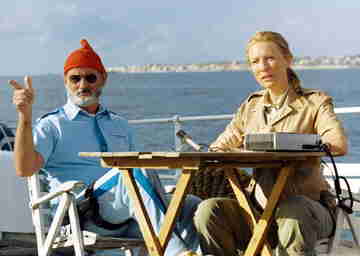
"This is gonna hurt"
I'm not ready for this in any way, shape, or form, but it's time for a challenge so,
This Friday, beginning at 5am, I'll have 24 hours to complete the following:
- 460 point bouldering day*
- Ride 46 miles with 4,600' of elevation gain (Figueroa Mtn)
- Run for 46 minutes uphill with 460 X 4 of elevation gain, and run back down, totally 9.2 kilometers of running (summit of Refugio Rd)
- 46 46-second sets of Zissou-approved "these are great" warm-ups
- Drink 40 ounces of wine "Pour the wine over here. He doesn't know anything about wine."
- Drink 6 Camparis, "on the rocks," poured by an intern
- Smoke 4 pipe loads of Borkum Riff "I don't usually try grass"
- Eat 46 sardines and bananas
Anyone who cares to join me, is more than welcome,
Stevesie
Follow the entire challenge at:
Birthday Challenge Blog
* Point scale for boulder problems. All done at Red Rocks.
V0- = 1
V0 = 2
V0+ = 3
V1 = 4
V2 = 5
V3 = 6
V4 = 7
V5 = 8
etc
Wednesday, November 15, 2006
Fast Food Nation Reviews
I really like Richard Linklater, the director of Fast Food Nation, because no matter what pop culture, market research, or his distributors tell him he continues to make movies where people talk. I don't mean talk as in "Hasta la vista, baby," or some other cliche-ridden "isn't that clever" marketing jargon, but TALK, as in conversations; the kind that were common place before TV, the Internet, and X-Boxes.
In Fast Food Nation, the film's message is mainly delivered through words. Sure, there's sex, and violence, and even a special effect, but for Linklater's film to be truly affecting it requires the audience to listen. And if they do, they will be rewarded. It's a gamble that I hope will pay off because it's a story that we need to hear. And within his story is an underlying hope--or perhaps just blind faith--that an audience will watch a film about real people dealing with real issues.
There are no true good guys or bad guys in the film. In an interview with my friend, Denis (link below) he says,
"It's like, hey, everyone's doing their best in this world, you know?"
His characters, like all of us, are all flawed. The good aren't all good, nor the bad all bad, which is something mainstream movie goers, particularly in the USA, seem to have a problem with. Maybe it's because we don't watch movies to watch people in conflict because we get enough of that in our own life.
But to me, at least, this is a great statement of optimism and belief in our society; that we will, when given the choice, choose to listen, think, and make our own decisions. Even in a film that shows life to be pretty bleak, it's a very optimistic view of the world.
Here is Denis' interview with Richard Linklater and writer Eric Schlosser.
Here is his review.
In Fast Food Nation, the film's message is mainly delivered through words. Sure, there's sex, and violence, and even a special effect, but for Linklater's film to be truly affecting it requires the audience to listen. And if they do, they will be rewarded. It's a gamble that I hope will pay off because it's a story that we need to hear. And within his story is an underlying hope--or perhaps just blind faith--that an audience will watch a film about real people dealing with real issues.
There are no true good guys or bad guys in the film. In an interview with my friend, Denis (link below) he says,
"It's like, hey, everyone's doing their best in this world, you know?"
His characters, like all of us, are all flawed. The good aren't all good, nor the bad all bad, which is something mainstream movie goers, particularly in the USA, seem to have a problem with. Maybe it's because we don't watch movies to watch people in conflict because we get enough of that in our own life.
But to me, at least, this is a great statement of optimism and belief in our society; that we will, when given the choice, choose to listen, think, and make our own decisions. Even in a film that shows life to be pretty bleak, it's a very optimistic view of the world.
Here is Denis' interview with Richard Linklater and writer Eric Schlosser.
Here is his review.
Tuesday, November 14, 2006
Anyone Can Now Comment On...
Anything.
It was brought to my attention that you needed to have your own blog to comment. Oops. Sorry - I don't know a lot about blogging. I didn't mean to not be accessible, though most people reading this probably know how to contact me anyway. Well, I've fixed it. The public forum is now public, and you can tell me if there's something you've got issues with.
Now, I'm out for an easy 10,
Steve
It was brought to my attention that you needed to have your own blog to comment. Oops. Sorry - I don't know a lot about blogging. I didn't mean to not be accessible, though most people reading this probably know how to contact me anyway. Well, I've fixed it. The public forum is now public, and you can tell me if there's something you've got issues with.
Now, I'm out for an easy 10,
Steve
Monday, November 13, 2006
Birthday Challenge Blog Is Up

My 2006 Birthday Challenge blog is up. It's both instrutions for other challengers on doing their blogs but also some history, which I'll past below as well.
I Thought It Up In A Dream, Actually
Birthday Challenges have been going on for a long time. The first I heard of them were through Jack LaLanne. I started doing my own in the mid 80s, which you can read about here (add link by clicking on the hyperlink icon above and adding your link.)
Since I set this site up they've become a lot more creative. Here are some good examples:
Reed 2000
Todd 2001
Hans 2004
Josh 2005
They've also gotten a lot harder.
Todd 2006
And how could they not, with training programs like this:
Bob's training schedule, 2000
But the point, really, is to challenge yourself. "Hard" is relative and truly only means hard for you. Running a marathon may be a warm up for Catra, but is an epic undertaking for most people. A birthday challenge is worthy as long as it's hard for you. It really doesn't matter what it's like for anyone else.
But by hard I mean HARD for you. If you know you can do it, it isn't a challenge. Like the Big Daddy likes to say, "if you can afford to lose it, it ain't gambling." Ditto for a challenge. They key to this is the unknown. You should go in with no idea about whether you can make it or not. Truly, some of the best challneges fail. But success, or failure, isn't point point, which is to get out there and chase the hairy edge as defined by you. Ultimately, what you're after is the feeling of why haven't I done a birthday challenge before?
Thursday, November 09, 2006
Hamburger Facts To Chew On

Next week our Beachbody newsletter will have a review of Fast Food Nationas well as an interview with Richard Linkletter and Eric Schlosser. While you're waiting, here
are some facts to chew on.
Bon Appetit!
Fast Food Facts
Courtesy of Fast Food Nation
Americans eat about 13 billion hamburgers a year. If you put all those burgers
in a straight line, they would circle the earth more than 32 times.
Americans currently spend about $134 billion dollars per year on fast food –
more than they spend on college education, computers, software or new cars.
The typical American child sees 20,000 junk food ads a year
One out of every five American toddlers eats French fries every day.
Four major meatpacking firms slaughter nearly 85% of the nation’s cattle, and
the majority of the nation’s beef comes from thirteen large slaughterhouses.
Meatpacking is one of the most dangerous jobs in the United States. In 2001, the
rate of serious injury was three times higher than that in a typical American
factory.
Every year, about 76 million Americans are sickened by something they ate.
At a modern processing plant, a single cow or steer infected with E:coli:O157:H7
can contaminate 32,000 pounds of meat.
A typical fast food hamburger can contain pieces of hundreds, if not thousands
of cattle.
Wednesday, November 08, 2006
See Fast Food Nation For Free
 If you're reading this, you probably care about your health. If this is the case, you've got to get out and see Fast Food Nation. Hey, you should read it, too, but it's easier to squeeze a couple of hours into a busy schedule. And if you head to their site:
Fast Food Nation
They'll give you some free tickets. Now you can't even use money as an excuse. Seeing this movie could, literally, save your life.
Check out our Beachbody newsletter too. Denis just interviewed filmmaker Richard Linkletter and writer Eric Schlosser so we'll have an exclusive next week. You can sign up, for free, on the bottom right of Beachbody.com.
Dealing with Injury
 In the scheme of things, my back is only a minor annoyance. However, I'm not that good a typist on my back, plus, not exercising makes me irritable. Anyway, I'm probably mainly still injured because I'm stupid as each day that I've felt okay I've done more than I should have and wound up on my back.
 I am getting great treatment: a combination of acupunture, chiroprtactic, and massage. This, along with yoga, ice, stretching has me, as usual, thinking that I should make these practices a more regular part of my life. In fact, the last time I did yoga regularly was recovering from a back injury. This is probably why I usually come back from injury stronger than I was before. Will I learn this time and be more proactive about my recovery? Probably not, but maybe writing this will help you to do it.
Anyway, as part of my recovery I went bouldering the other day at a place I hadn't been in years. It was sublime. I haven't been pysched to boulder in a long time but was having such a great time I was talking to Tuco about the great session we were having to the point that had anyone else been there they'd truly have thought me insane. Me, bouldering and him, chasing rocks at his favorite place on earth. Here's a pic of the Rat, twelve years later, still looking pretty damn fit.
Woof.
Wednesday, November 01, 2006
Best Bouldering Day of the Year
I'm back in Ca, getting my back worked on in hopes of actually being able to support my girlfriend in her upcoming 100 mile race. Since race support of this kind means more than just the usual (I'm supposed to run 40 miles), I'm in need of some quick healing.
All was well going very well so the other did I hit up Red Rock, one of my old bouldering haunts. It was a bit sad at first, since the area has been getting virtually no traffic and the routes were dirty
All was well going very well so the other did I hit up Red Rock, one of my old bouldering haunts. It was a bit sad at first, since the area has been getting virtually no traffic and the routes were dirty
Friday, October 27, 2006
Eastern vs Western Medicine
 I should begin by apologizing for my camera phone. It was stunning here yesterday and, during this pic, the sun was setting and the "haze" on the right of the screen was red. Oh, well. This was taken from a trail above my house; about 10 minutes on my CX bike.
My back has recovered enough to get on my bike for a couple of hours yesterday. Saw an accupuncturist and it greatly helped. I tell ya, western medicine is great if you're very sick or have a traumatic injury. But for most of the maladies that affect daily life, eastern medicine is the way to go.
For example, going to my western doctor feels like I'm in a fallout shelter during a war. No matter what time I make an appointment I have to wait for hours in a room filled with sick patients complaining about our medical system. When I get inside, my doc wants to prescribe some medication and get me out of there asap. I can't blame him, as there's generally a lot of moaning and yelling coming from the other side of the wall.
Eastern medical clinics couldn't be more different. They're quiet and serene. Everyone on the staff is utterly calm and the entire experience is soothing. You feel better just sitting in the waiting room because it's filling with positive energy and decorated in a way the exudes calm. Treatments involve you as an individual. Questions are asked and answers taken into consideration.
By contrast, my western doctor usually acts as if I have no idea what I'm talking about, even when I know far more than him about something. For example, I have dupuytrens in my hands from climbing and wanted a specialist to look at it. My doctor didn't believe me (he barely knew what it was), even though I obviously knew a lot about it, and sent me to the wrong specialist twice. After this time I just found a hand doctor through my network and saw him (it took him about 3 seconds to diagnose me). But since my doctor wouldn't recommend it, my insurance won't cover it. They did, however, pay for three appoinments with the wrong people.
Don't get me wrong, if I tear my ACL or get cancer, I want the most technologically advanced people I can find addressing my problem. But for everyday living, eastern medicine is where it's at because it's all about wellness and living in harmony with the natural world. But western doctors, who are not required to take nutrition or exercise classes, seem to ignore this part of the process. Western medicine is based on fixing problems that often arise from living a life out of balance. Eastern attempt to help keep you life in balance and, hence, avoid those problems in the first place.
They are really two completely different things and we'd save a lot of money if our system could change to acknowledge this fact. Insurance should support fitness, nutrition, and eastern medicine which, in turn, would keep my doctor's office from looking like a fallout shelter and give him time to do the job he was trained for. Even without insurance, I suggest eastern medicine for everyone. I spent nearly two hours at my accupunturist's office. The cost: $85.
Wednesday, October 25, 2006
Some Days You Eat The Bear...
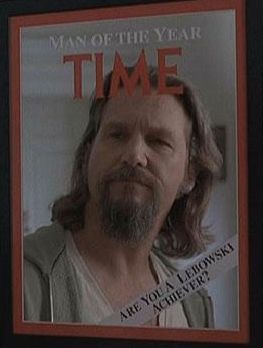
And some days, well, he eats you.
A man much wiser than myself once said that and I'll be damned if it isn't the truth. So, I've spent a few days down and out because I threw out my back. And I did it doing basically nothing. Just one of those things, I guess. Anyway, it's been one of those years where I can't seem to string any sort of fitness routine along. I mean, I'm out there doin' stuff constantly. But every time I've set my mind up to doing something challenging, something else in life has seemed to get in the way. So, the birthday challenge is, at least, on hold. I will do something but, realistically, there is just no way I can plan it at this point. At this rate, I'll just be happy to be rollin' at all when the day arrives.
Strikes and gutters. But, hey, I can't complain.
The Dude abides.
Monday, October 23, 2006
Birthday Challenge Thoughts

Since I'm going to be in California for my birthday it's a perfect chance to clean up some unfinished business. Here's what I'm thinking:
Because rushing into climbing shape tends to lead to injuries, I've been in no hurry here in Utah. With thousands of new routes within an hour radius of my house, I have no need to. This is completely different than California, where I've climbed pretty much every route I've wanted to that isn't in the Sierras, which would translate to an accelerated training program after cycling season and then getting injured. However, I've very little on my climbing agenda in Ca anyway. Nothing from this time of year.
A couple of years ago I concocted an idea to run and ride the Backbone Trail. It's been run before, at least once (probably a lot more), but never run and biked. The main problem here--besides fitness--is that some of it's closed to bikes. I'm not going to poach it, so I've come up with an alternate route. Well, maybe I'll poach a little of it...
I've always wanted to run the 9 Trail in Santa Barbara but because it's around Thanksgiving (and my birthday) there's always been other stuff on the agenda. Of course, just because I finally decide to do it the sucker sold out. I think I'll try it anyway.
I've also wondered about a big day on the bike near SB, climbing all the major climbs: Gibraltar, Painted Cave, Figueroa from both the north and south. This day is on par with the hardest single days I've had on a bike, or at least close.
I should add some climbing as well.
Okay, this ain't all happening in one day. The Backbone is 100k plus with heaps (probably 20,000' at least) of elevation change. The 9 Trails has 10,500' in just 35 miles and not even one section of simple running. In fact, the 9 Trails course is the toughest running course, step by step, I've seen, which is why it's so cool. The biking is, well, just biking. But a lot of biking. The climbing is going to be hard no matter what because I didn't climb all summer and, currently, don't even have the upper body strength to do a half hour set of pull-ups, something I used to do on my rest days.
Here's what I'm thinking with a month to go:
I've done loads of one day challenges, a 40 day challenge, and a 43 hour challenge. This year will be four days, with an optional .6 a day off (maybe for Thanksgiving).
The main portion of the challenge with be the Backbone link-up. By far the hardest thing. I have no idea if I'm even in the realm of being able to do it.
Next will be some riding: the 4 climbs around Santa Barbara.
Next will be some climbing. I guess 46 routes sounds good. Most I've done in a day this year is, hmmm, maybe a bunch when I was fit last winter. Anyway, it's 10 since I've been climbing again. This will not be a rest day. I'll probably have to climb at Echo, meaning that less than 10 will be under 5.10. And probably more than 10 will be 5.11. I may throw some 12s in there but I'd have to change this to laps because there's no way I can do six laps of 5.12 right now, even without 40 other routes. But, hey, I've still got a month....
I'll try and finish with the 9 Trails. Could be ugly at this stage. Fresh I'm sure I could do a decent time but, hmmm, I'm thinking that just finishing will be enough by this point.
Anyway, more thoughts later. I'be better get training.
Sunday, October 22, 2006
The Next President?
In my work I don't take my politics beyond the business at hand: health and fitness. These issues, however, are crucially tied to our political system where more and more politicians find their hands tied by those who put them in office in the first place. This, unfortunately, is not the individual voter but ultra partisan interest groups. We've become a nation ruled by lobbyists.
During a discussion with one of my most politically polarized friends we easily came to the conclusion that we, as a team, would do a much better job in running our country than those in charge. This was due to a very simple fact; that our goal would be to do what's best for the country instead of placating a long list of special interests.
This is a disturbing idea. I mean, I'm pretty smart. So is my friend. It's not that I don't have confidence in my abilities. But I think it could be said for many people as well. As long as the ultimate interest would be creating a better country--or world--as opposed to personal gain (which includes "payback" to those who've personally helped you), I don't think it would be hard to do a better job than we're doing now.
I was almost disgusted when Arnold Schwarzenegger became the governor of California using a campaign of forced rhetoric and movie quotes. Now, however, I'm very glad he did. While I disagree with much of his agenda, the pure fact that's he's bipartisan is forcing both parties to find some sort of common ground. For example, he's pro business and pro environment. If we could rectify even this one problem--businesses polluting in order to boost their quarterly earnings--the world would make its most significant change in a long time.
Anyway, the point of this morning's diatribe is not to preach. I merely wanted to point something out. In a political conversation a few years back someone said to me, "You're like a combination of Gandhi and Barack Obama." I didn't know much about the latter name at the time but have been watching him since. And, for certain, he's worth watching. Because, like him or not, his agenda is for a more thoughtful and bipartisan world. And if we can't find some common ground to stand on, we've got a lot bigger problems facing our future than being overweight.
Btw, this is a bipartisan article. Not necessarily pro Obama at all.
The Fresh Face
Here's an excerpt of his book.
The Audacity of Hope
Subscribe to:
Posts (Atom)